The Eastern Star
THE EVOLUTION
FROM A RITE TO AN ORDER
BY
Harold Van Buren Voorhis
RED BANK CHAPTER No. 70, O. E. S.
NEW JERSEY CONSTITUTION
MACOY PUBLISHING AND MASONIC
SUPPLY COMPANY, INC.
RICHMOND, VIRGINIA
COPYRIGHT, 1938
BY HAROLD VAN BUREN VOORHIS
Printed in the United States of America
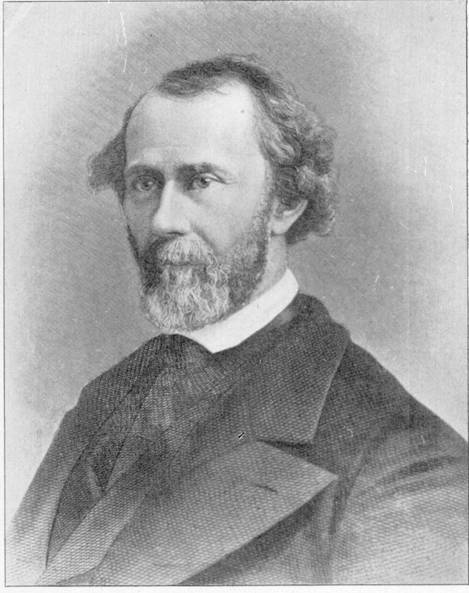
ROB MORRIS
ContentsPART I
FOREWORD xiii
1. INTRODUCTION . 1
1. Historical beginning compared with Freemasonry
2. Three stages in the development of the Eastern Star
3. First reference of Rob Morris and the Eastern Star
2. ROB MORRIS 5
1. Resume of life of Rob Morris
2. Morris as an Educator
3. Comment on Morris
3. FRENCH ADOPTIVE MASONRY 16
1. Early Androgynous Bodies and Lodges of Adoption
2. The French Adoptive Rite
3. Morris statement regarding French origin of his Rite
vi CONTENTS
4. EARLY AMERICAN ANDROGYNOUS BODIES 22
1. Thesauros of the Ancient and Honorable Order of the Eastern Star
2. Organization of the Eastern Star Degrees by Morris
3. American Androgynous Degrees prior to the Eastern Star
5. FEMALE DEGREES RECEIVED BY MORRIS 30
1. The Morris statements - William H. Stevens - Giles M. Hillyer
2. Further statement of Morris regarding his authorship
6. "CONSTELLATION" PERIOD 35
1. Condition of country at the time the Degrees were organized
2. Morris statement of how he came to write the Degrees
3. The Supreme Constellation
4. The Mosaic Book
7. "FAMILY" PERIOD 51
1. Reason for formation of Families Manual of Eastern Star Degrees
2. Change from Constellations to Families
3. Fatal Book of Instructions - Rosary of the Eastern Star
4. Manual of the Order of the Eastern Star by Robert Macoy
CONTENTS vii
8. SUPREME GRAND CHAPTER 58
1. Second stage - Robert Macoy biography
2. Morris statement regarding Macoy's
assumption of the Eastern Star Degrees
3. Macoy made Supreme Patron of the World
4. Macoy originated the Chapter System
of the Eastern Star Degrees
9. FIRST EASTERN STAR CHAPTER 66
1. General discussion of what constitutes the first Chapter
2. Statements regarding the formation of Alpha
Chapter No. 1, New York, N. Y.
3. Remarks about first Chapters
10. EASTERN STAR IN MICHIGAN 74
1. Early history of the Eastern Star in Michigan
2. Other Chapters claiming existence prior to Coldwater Chapter, No. 1
3. Rituals issued in Michigan
4. Opposition by Morris to the Michigan Adoptive Lodges
11. FIRST GRAND CHAPTER 82
1. Situation of Michigan as regards the first Grand Chapter
viii CONTENTS
2. Indiana Adoptive Lodge
3. New Jersey situation relative to being the first Grand Chapter
4. Formation of the Grand Chapter of New York
12. GENERAL GRAND CHAPTER 89
1. Third stage - Willis D. Engle starts movement toward
the formation of a national body
2. Willis D. Engle - biography
3. Delegates chosen for Convention
4. Convention and permanent organization of the
General Grand Chapter
5. Condition of Order at the time of formation of the
General Grand Chapter
6. Meetings of the General Grand Chapter
13. EASTERN STAR IN SCOTLAND 103
1. Introduction
2. Henry John Shields - biography
3. Records of first Chapter in Scotland
4. Other Chapters chartered by Shields
5. Crombie Chapters and those chartered by the
General Grand Chapter in the United States
6. Grand Chapter of Scotland organized
CONTENTS ix
7. Visit of Most Worthy Grand Matron of the
General Grand Chapter to Scotland - Visit of
the Most Worthy Grand Matron of the Supreme
Grand Chapter of Scotland to the General Grand
Chapter in the United States
PART II
1. OTHER ORDERS ALLIED TO FREEMASONRY 113
1. Order of the White Shrine of Jerusalem
2. Order of Rainbow for Girls
3. Order of the Amaranth
4. Order of Job's Daughters
5. Daughters of the Nile
6. Order of the Gold Chain
7. True Kindred of the United States and Canada
8. Social Order of the Beauceant of the World
9. Ladies Oriental Shrine of North America
10. Daughters of Mokanna
11. Daughters of the Eastern Star
12. Order of Beatitudes
13. The Daughters of Osiris
x CONTENTS
14. Dames of Malta, Ladies of the Knights Hospitallers of St. John of Jerusalem
15. Constellation of Junior Stars
PART III
1. PERSONAL RECORDS AND STATISTICS 121
1. Rob Morris
2. Robert Macoy
3. Willis Darwin Engle
4. Statistics of O.E.S. 1880, 1907, 1931
5. Statistics, 1952, 1970
6. Statistics, Scotland, 1938
7. O.E.S. Chapters with continuous records
2. ACKNOWLEDGMENT 134
3. BIBLIOGRAPHY 136
Illustrations
Rob Morris Frontispiece
PAGE
Newspaper announcements of Rob Morris' lectures, 1868 13 - 14
Excerpts in code from an old ritual of Adoptive Degrees of Masonry 20
Earliest form of "Petition" for Morris Eastern Star Degrees 25
Certificate of Degree of Holy Virgin 27
Folded plate in The Rosary of the Eastern Star 39
The Mosaic Book of the American Adoptive Rite title page 40
"The Adopted Mason, A Bi‑Monthly Journal" title page 42
List of Charters granted to Constellations, with officers' names, 1855 44 - 45
Constellation Rituals title page, 1869 48
Fly leaf of James B. Taylor's own copy of a Constellation ritual 49
Manual of the Eastern Star Degree for the Use of
Patrons title page, by Morris, 1862 52
Charter of Miriam Family No. 111, Chicago, Illinois . 54
Title page of Macoy's Manual of the Order of the Eastern Star, 1865 55
xi
xii ILLUSTRATIONS
PAGE
The Rosary of the Eastern Star title page, 1865 56
Presentation page of Macoy's Manual given by Morris to his wife in 1866 57
Robert Macoy 59
Title page of Robert Macoy's Adoptive Masonry. A Book of
Instruction in the Organization, Government and Ceremonies
of Chapters of the Eastern Star, 1869 . 62
Macoy Eastern Star Chapter Charter granted to Miriam No. 1, of Chicago 64, 72 Newspaper announcements of Alpha Chapter No. 1, N. Y.
Second and Third Annual Receptions, 1867 and 1868 70
Coldwater (Michigan) Adoptive Lodge Charter 76
Minutes of Coldwater Adoptive Lodge meetings, 1867 78 - 79
By‑laws of Golden Chapter No. 1, Keyport, New Jersey, 1870 84
Willis Darwin Engle 91
Title page of A Review of the Critical and Explanatory Notes of
Robert Macoy on the Ritual of the Order of the Eastern
Star, by Engle, 1879 95
Eastern Star Apron made in 1868 138
Foreword
For several years I have been privileged to address fraternal bodies
And answer questions on fraternal matters at the conclusion of these
Talks. There have been many times when those present have
Asked for information about the Order of the Eastern Star -
Length of its existence, where and by whom it was started, and so on.
HAVING ACQUIRED CONSIDERABLE DATA, and being reminded that no accurate history of the Eastern Star is readily available, I have compiled my data into a small book in order that they might be accessible.
Students and historians of Freemasonry today are largely concerned with a "house‑cleaning" of what for the past two hundred years has appeared under the guise of history. As an adjunct of Freemasonry, the history of "female Masonry" has thus been brought to the attention of those interested.
There has always been a dearth of published historical information concerning the Eastern Star, yet of the androgynous fraternal groups of the last century, it is the only one about which anything more than a few scraps of information has been published. Information about groups having even a more recent organization is difficult to secure.
xiii
xiv FOREWORD
In 1910 the Rev. Willis D. Engle, of Indiana, first Grand Secretary, and later Grand Patron, of the General Grand Chapter of the Order of the Eastern Star, produced a rather comprehensive book of 296 pages entitled, The History of the Order of the Eastern Star. A revised edition appeared in 1912. In 1917 Mrs. Jean M'Kee Kenaston, Past Grand Marshal of the Grand Chapter, O.E.S., of South Dakota, published a voluminous work of the same title, with 689 pages. Both books are out of print. No other histories of the Order have had a content of such magnitude and therefore they have been used as a basis of many accounts concerning the Order. It naturally follows that many who have written pamphlets or brochures about the Order have indiscriminately excerpted much, and in so doing have carried the errors, truths and conclusions directly into their own works. Some of these small works, however, do contain bits of information not found in the two larger books.
Prior to 1900 most of the writings about the Order, or its antecedents, were to be found in various Masonic magazines, especially during the lifetime of Rob Morris. In recent years a few historical sketches or reviews have appeared in encyclopedias and general histories. The Engle and Kenaston histories are largely concerned with examinations of ritualistic matter, symbolism, State and General Grand Chapter histories, biographies of others beside Rob Morris, Robert Macoy and Willis Engle, and the presentation of purported data to "prove" some moot point. Neither volume contains as much as fifty
FOREWORD xv
pages devoted entirely to the history or the formative period of the Rite itself. Further, the handling of the facts is somewhat "angular" - that is, one side may be more freely painted than others. Nevertheless, and in spite of all this, both histories are of great value as compendia of data concerning both the Rite and the Order.
It is not our opinion that the idea, the views taken, the conclusions developed, and the opinions expressed are not of interest or of use to the general reader or the historian. Rather, our point is that the authors fail to make clear the difference between the history of the RITE and the history of the ORDER, and have treated the two as one and the same subject, which they are not. Further, we believe that the "member at large" is more interested in what took place in the development of the Eastern Star than in the "whys." In other words, we feel that a short historical treatment, covering the salient points leading up to the origin of the Order, is desirable. Such a work this purports to be and, in addition, makes available some statistics to give a working knowledge of the growth of the Order. Also, it has seemed that some information covering "allied" Orders and Degrees would be appropriate, wherefore a short treatment of these groups is given.
The work contains no analyses of rituals or liturgies of the degrees of the Eastern Star. Such studies are not for general distribution. The mention of these documents or printed versions is only made when it has a bearing upon the story. Treatment of individual Grand Chapters is not a province of the present subject. Such
xvi FOREWORD
should appear in separate form - one for each State - compiled by a qualified historian familiar with local conditions. One exception has been made in the latter instance. A rather extended treatment of the Eastern Star in Scotland has been made because of the small amount of data elsewhere available concerning the early history of the Order in that country. We are indebted to recent researches made by Worthy William Bryce, Grand Secretary of the Grand Chapter of Scotland, for those portions dealing with activities in the land of the Shamrock and Thistle.
HAROLD VAN BUREN VOORHIS July 2, 1938.
EASTERN STAR
PART I
CHAPTER I
Introduction
___________ 1.
THE ORDER OF THE EASTERN STAR had a beginning historically comparable to that of Speculative Freemasonry. The latter came into organized existence in London, England, in 1717, and, while it is definitely known that Masonry in various forms existed long be‑fore that date, both in England and elsewhere, whence it came is not really known. Because Masonry, prior to the actual organization of the premier Grand Lodge, was predominately speculative, many have made the error of believing that it was exclusively so. Many records of individual Masonic lodges of the seventeenth century are extant. From these and other available data many theories have been advanced as to the origin of Masonry, but no specific historical beginning exists.
After assuming a number of organized forms, Free‑masonry went through a relatively short period of readjustment, emerging a few years later in a form at‑
2 THE EASTERN STAR
tractive, and therefore popular. Growth was rapid and the organization took on a stability that has continued with little interruption to the present time.
Although the Order of the Eastern Star came into being around a century ago, it passed through a cycle somewhat similar to that experienced by Freemasonry. Because of this recent origin considerable source material is extant, enabling us more easily to reconstruct its development than that of Freemasonry. While the development processes of both groups are parallel, the readjustment period of the Eastern Star degrees came prior to the organization of the Order of the Eastern Star itself. This has made it so difficult to separate the periods that practically all who have written histories of the Order have neglected to do so.
__________ 2.
The development of the Eastern Star degrees from a single set of degrees to a national body is separated into three distinct stages. First, the organization of the detached degrees into an American rite by Rob Morris; second, the organization of the chapter system by Robert Macoy, followed by the formation of the Grand Chapter; and third, the organization of the General Grand Chapter, the national body, by Bro. Willis D. Engle.
In the strictest sense, a rite consists of an organized grouping of steps, familiarly called degrees, in some prescribed form, to 4be imparted in a solemn ceremony.
INTRODUCTION 3
Usually more than a single degree is necessary to constitute a rite, but cases are known in which the steps are so grouped that in practice the rite contains but a single degree. The control of the rite may be either hierarchical or democratic.
An order, however, can only be properly maintained through the combination into a single governing body, by mutual consent, of several similar bodies. While a rite of one or more degrees is sometimes called an order, it is not really an order at all.
Up to the time of the formation of the first Grand Chapters of the Order of the Eastern Star, no ORDER of the Eastern Star chapters, in a generic sense, existed. Except in Michigan and Indiana, none of the American androgynous bodies had formed themselves into a state group to become an order. In Michigan and Indiana the bodies were "Lodges of Adoption," and the order which they founded under the title of "Grand Lodge of Adoptive Masonry," was not an order of chapters of the Eastern Star as such. It matters little what their ritual was, from whence they sprang, or what they became later - the fact remains that they were not an Order of Eastern Star chapters. This statement does not alter the contrary fact that the Grand Chapter of Michigan, Order of the Eastern Star, is the oldest and also the first organized order which conferred the Eastern Star degrees. There has been no break in its existence - only in its name.
The Order of Eastern Star chapters came into existence, ipso facto, when, following the established custom
4 THE EASTERN STAR
of American Masonic lodges, the first groups of chapters in a single state, by mutual consent, set themselves up as an ORDER of the Eastern Star chapters in that state.
__________ 3.
The Order of the Eastern Star has no patron saints, yet one man was so inseparably associated with it that he has been raised almost to that pinnacle. Strangely enough, this man had practically nothing to do with the organization of the ORDER of the Eastern Star. On the other hand, he was the founder of the Rite, substantially as it exists today.
Because numerous references to him would be misleading were it not known what manner of man he was, we give here a brief sketch of his life. He was a man of manifold activities - fraternal, scholastic, literary, civic, business, musical, numismatic and military. Nothing less than a book could do justice to his career. However, much as it is realized that this is not a place for biography, because of his unique position regarding the Order, it is felt that an exception should be made. The reference, of course, is to Dr. Rob Morris, of Kentucky.
CHAPTER 2
Rob Morris
__________ 1.
ROB MORRIS was born on August 31, 1818, at 26 Rector Street, New York City. Previous biographical sketches of Morris have shown him to have been born in Massachusetts. It has now been definitely established by documentary proof that New York was his birthplace. He was the son of Charlotte Lavinnia Shaw and Robert Peckham who were married in Taunton, Massachusetts, December 1, 1811. They came to New York City in 1815 after having lost their first two children, Robert Fales and Mary Shaw Peckham, who died in infancy.
In 1816 another child, John Anson, was born. Then came Robert Williams (Rob Morris). In 1821 another girl was born to the Peckhams - Charlotte Fales, who lived until 1902, then the widow of Elisha T. Wilson of Taunton, Massachusetts. She was the only one of the Peckhams to survive Robert Williams (Rob Morris), and with whom she corresponded until his death, al‑
6 THE EASTERN STAR
though they probably never were together after 1826.
In 1821 Rob Morris' parents separated and the baby girl, Charlotte Fales, went with her mother to Taunton. Robert Williams and his brother, John Fales, remained with their father in New York City. Robert Peckham, the father, died in the City Hospital on February 2, 1825 and the two sons were sent to their mother. Shortly after Robert went to live with John Morris in western New York. He took the name of his foster father, MORRIS and stayed with the Morris family until about 1837.
During the years he spent with his foster parents, young Robert received his education, the exact nature of which has not been ascertained. However, the effect of this instruction is evident when his later life attainments and accomplishments are considered. He is re‑ported to have said that he was admitted to the Bar at the age of twenty‑one and in Volume IX of his Universal Masonic Library, dedicated to the Hon. James M. Howry, P.G.M., of Mississippi, he said that Brother Howry "Encouraged me to become a Masonic writer; an ornament to the Bar, the Church and the Masonic Institution."
The only fact that has come to light connecting Morris with the legal profession is the conferring upon him in 1860 of the honorary degree of Doctor of Laws by the Masonic University in Lodgeton, Kentucky. This was after his statement about being an "ornament to the Bar," however. He was familiar with Latin and knew some French.
ROB MORRIS 7
After leaving the Morris family, he traveled in Missouri, Kentucky, Tennessee and Mississippi. On May 26, 1841 he married Charlotte Mendenhall, daughter of a Samuel Mendenhall, in Shelby County, Tennessee. Of her family we have no record. E. W. Richie of Montgomery, Alabama, one time neighbor of Dr. H. R. Coleman, closest friend of Rob Morris for many years, stated that Miss Mendenhall was "a daughter of one of the most prominent families in Mississippi."
The marriage resulted in nine children. The first, Robert S. born on June 13, 1842 and the last, a son born in 1859, did not mature. A girl, Ella Wilson, died on July 29, 1877, aged twenty years. The other six children, three girls and three boys, survived him, as did his wife. Mrs. Morris passed away on August 14, 1893.
On March 5, 1846 Rob Morris first saw Masonic light in Oxford Lodge No. 33, Oxford, Mississippi (now T. S. Gathright Lodge No. 33). The two remaining symbolic degrees were received on July 3 of the same year. Here he also received the "Ladies Degrees," which later became the basis of his work in formulating the Eastern Star degrees.
In 1845 Morris became the Principal (and was most of the faculty) of Mount Sylvan Academy, established by the Freemasons in Oxford, Mississippi, a town of less than five hundred inhabitants. In 1848 he moved to Black Hawk, Carroll County, in the same state, but in 1849 we find him moving again - to Jackson, also in Mississippi. It was in this year that he published his first Masonic poem, "The Triumphs of Innocence," and was
8 THE EASTERN STAR
awarded a prize by the editor of the "Masonic Signet," of St. Louis, Missouri. He had affiliated with Mount Moriah Lodge No. 86, in Black Hawk, on October 21, 1848, but demitted May 26, 1849 to affiliate with Pearl Lodge No. 23, in Jackson. He was secretary of this lodge in 1850, 18 51 and 1852.
In this year, 1849, he took his first active participation in Masonic affairs. It was also the year in which he wrote his first Masonic address to be delivered before the Grand Lodge of Mississippi. Not being called for, however, the address remained in his portfolio until 1859, when it was read before the National Masonic School of Instruction at its first General Session at Louisville, Kentucky. It may be found in the published Proceedings of that body. The title was "Masonry, the Harmonizer of the World."
The Grand Lodge of Mississippi did not overlook Brother Morris at the 1849 meeting, however. Reference to the Proceedings of that year elicits the information that the "Rev. Robert Morris" was made Grand Chaplain, and that he was reappointed the following year. The Grand Chapter of Royal Arch Masons also made him Grand Chaplain in 1849. The title "Rev." is an error. Dr. Morris was never an ordained clergyman, although he did conduct church services and religious gatherings.
In 1851, Morris said, "I adopted the apparently quaint and odd cognomen of Rob as a prefix. The immediate cause of this was my determination not any longer to
ROB MORRIS 9
be confounded with Mr. Robert Morris, the author and poet, of Philadelphia."
In January, 1852, he moved his family to Fulton County, Kentucky, where he frequently visited Mills Point Lodge No. 120, at Hickman. In 1853 he moved to Louisville for a few months, where he busied himself preparing to publish a Masonic magazine, the first issue of which came out in May, 1853. It was the Kentucky Freemason. After eight issues its name was changed to The American Freemason. He continued his association with the magazine until July, 18 57. While engaged in these various activities Brother Morris published his first Masonic book, The Lights and Shadows of Freemasonry, 1852.
In November, 1853, Brother Morris moved to Lodgeton (Lodge), Kentucky, where he became deeply engaged in his Masonic and Eastern Star labors. He did a great deal of speaking during this period, and on one of his trips he met a Brother Elisha D. Cooke, whose name is often found linked with that of Morris during his work of lecturing on the "Conservator Ritual" movement.
Cooke was made a Mason in Richland, South Carolina. He visited Lodgeton in March, 1858, and was engaged by Morris as an assistant. The following year Morris sent him to Europe upon a Masonic investigation. Cooke left New York in May on the S/S "Ocean Queen." There he stayed until September, 1860, when he was recalled because of the Civil War. He was employed by Morris until October, 1862.
10 THE EASTERN STAR
After the establishment of residence in Kentucky, Brother Morris published a great number of Masonic books and periodicals, contributed to others, and also wrote many Masonic and other poems. He advanced in every branch of Freemasonry, becoming Grand Master of the Grand Lodge of Kentucky on October 12, 1858. He at once moved to Louisville, where he continued to reside until after his term as Grand Master was completed. Some words of his own best describe his movements during the next period of his life:
"In April, 1860, I removed my family to La Grange, Kentucky and accepted the chair of Ancient and Modern History in the Masonic University. At the annual commencement, June, 1860, I was honored by the same with the collegiate degree of Doctor of Laws. My labors as professor were con‑fined mainly to one weekly] lecture, which I continued until the decadence of the University, in the latter part of the succeeding year.
"On the 24th of June 1862, I, who received my own degree from the University in 1860, was elected President of the College and accepted the appointment with a view to keeping the institution alive and holding the faculty together. I accepted it for one year with a positive refusal to devote any portion of my time to lecturing.
"In July, 1862, I accepted very unwillingly the position of Provost Marshal of Oldham County, Kentucky, which caused me infinite trouble and expense. In August a commission as Colonel was tendered me by the Governor, I accepted it with a view of preserving the county in which I lived and the adjourning district from inroads of guerilla, and held the commission until the entire State Guard was mustered out of service about the first of November."
ROB MORRIS 11
According to a "card" he printed, he was "Commander of the Horse Guards." There is also a printed notice, dated Louisville, October 10, 1862, announcing the fact that he had moved to Louisville as the rebels had entered La Grange. His stay this time was very short for his fears were found unwarranted and he soon returned to his home.
In La Grange Brother Morris lived in a place which he named "The Three Cedars." It was destroyed by fire on November 8, 1861, the conflagration costing him the loss of his Masonic jewels, diplomas and certificates. Numerous books, papers and manuscripts were also lost.
In 1868, after being subsidized by Freemasons interested in his project, Brother Morris sailed on the S/S "France" on February 21, 1868 to visit the Holy Land where he made researches into the traditions and legends of Biblical and Masonic lore. During his stay in Palestine he became acquainted with Mohammed Raschid, Governor‑General, who also was a Freemason. During his sojourn he delivered an address in a Masonic lodge in Smyrna, Turkey. In 1872 he published a large volume, Freemasonry in the Holy Land, which was a running account of his travels and investigations. The work was dedicated to Raschid. A Lodge of Instruction, opened by Morris in Jerusalem, later culminated in the formation of Royal Solomon Lodge No. 293 under the Grand Lodge of Canada. He was named the first Master, but never sat in the lodge.
For the next few years Morris poured forth his writ‑
12 THE EASTERN STAR
ings and contributions on many subjects to various periodicals in which he was interested or of which he was editor. These took every form - books of poems, books on coins, books on Freemasonry, and many pamphlets on allied subjects. The Twelve Caesars, Illustrated by Readings of 217 of Their Coins and Medals, which he published, was the model for such works subsequently published in the United States.
In 1878 Dr. Morris made another trip to Europe, visiting many lodges and lecturing to Masonic groups. Favorable comment upon his talks reached the ears of the Prince of Wales (later King Edward VII) who at‑tended at least two lodge meetings at which Morris spoke.
Upon his return from Europe he took up residence again in La Grange, Kentucky, where he enjoyed receiving visitors from all parts of the country, especially men of prominence in the ranks of Freemasonry.
Early in 1887 his health began to fail. In June, 1888, he was stricken with paralysis. The end came within six weeks. On July 31, 1888, he breathed his last, surrounded by his wife and six children. His funeral was conducted by the Grand Lodge of Kentucky, a full record of which is printed in the Proceedings of that body. Eleven Pilgrim Knights of the Order of the Palm and Shell, a pseudo‑Masonic body, created and organized by Brother Morris, carried his remains to their final resting place.
ROB MORRIS 13
__________ 2.
Throughout his entire adult life, Dr. Morris was an educator. As his years progressed he devoted more and more time trying to interest the Freemasons of America' in knowing something about themselves, using freely both the printing press and the lecture platform. In this work he visited thousands of lodges and many Grand Lodges. Following are reproductions [text] of announcements in the New York Dispatch of some of his lectures.
NEW YORK DISPATCH
Nov. 8, 1868
?A lecture entitled:
“MASONIC RESEARCHES in the HOLY LAND”
will be delivered by Rob Morris L.L.D. in the
rooms of Greenwood Lodge No. 50 F. and A.M. cor.
Twenty-Third Street and Third Avenue, South Brooklyn,
on Thursday evening November 12th. Tickets
fifty cents. After the Lecture, the Eastern Star De-
gree will be conferred.
Nov. 15, 1868
Lecture by Dr. Morris – Masonic
Explorations in the Holy Land – This
lecture now beginning to be thoroughly appreciated by the
Craft, was given by Dr. Morris last week in the three
Lodges as announced in our issue of the 8th. At
Greenpoint, the audience was immense – at Common-
wealth Lodge the new and magnificent hall seemed
decorated with youth and beauty, in the crowd of
delighted ladies, who thronged at Commonwealth
Lodge for the attendance.
For the coming week the engagements are Tues-
day, Delta Lodge, No. 451 at Brooklyn: Thursday,
Polar Star Lodge, New York: Friday Tem-
plar Lodge No. 203, New York: Pratt Lodge, Charter
Oak Lodge and Benevolent have made engage-
ments at a later date.
Nov. 19, 1868
__________________________
?Polar Star , No. 245, F. and A.M.
A LECTURE
ON
MASONIC RESEARCHES
IN THE HOLY LAND.
by
Rob Morris L.L.D.
IN SISXTH STREET BAPTIST CHURCH
Thursday evening November 12th. Tickets
TWENTY-FIVE CENTS.
__________________________
Nov. 20, 1868
__________________________
? R.W. Rob Morris will deliver his
lecture, “MASONIC RESEARCHES in the HOLY LAND” on
Friday evening, November 20th, at half past 7 to the Brethren
of Templar Lodge No. 203, F. and A.M. at corner of Eigh-
teenth Street and Eighth Avenue, after which the East-
ern Star Degree will be conferred.
The Brethren with their female relatives are respect-
fully invited to attend. JAMES DUKE, M.
__________________________
While there were some who did not agree with him in his conclusions regarding ritualistic matters, nevertheless he was honored in every branch of the Fraternity for his sincerity, integrity and industry.
On December 17, 1884, Dr. Morris was crowned "Poet‑Laureate of Freemasonry" before a large group of admirers and fraternal friends in the Masonic Temple, New York. This honor first rested (posthumously) on the head of the immortal "Bobby" Burns. After the passing of Brother Morris the late Brother Fay Hempstead, of Arkansas, was so honored.
__________ 3.
The Order of the Eastern Star, like the organization to which it is related, though in no way a part, has had its panegyrists and its calumniators. Some panegyrists
ROB MORRIS 15
could not resist taking unnecessary "flings" at Rob Morris, to whose kindly heart and overflowing human sympathy .thousands of men and women were indebted during his active lifetime. Those who have not studied the life of the man cannot fully appreciate the motives which prompted many of his actions. As we study the events in which some of our past historians took an active part, we can realize that injustices were inflicted upon the gentle and bewildered Morris.
CHAPTER 3
French Adoptive Masonry
__________ 1.
WHILE THERE WERE European organizations that might be considered patterns, if not forerunners, of the Adoptive Rite of Freemasonry, the Rite itself came into existence during the last quarter of the eighteenth century.
For several years androgynous groups had been active in France. Around 1730 there is evidence that some‑thing in the nature of a "Mixt" society existed. In 1743 there was the "Ordre des Felicitaires," and a few years later another called "Knights and Ladies of the Anchor." Both of these were nautical in their symbolism. Then, in 1747, came the "Ordre des Fendeurs," sylvan in character. Numerous others could be named, some created by Masons, but with no apparent connection with Masonry itself.
The natural improvement of each succeeding group finally resulted in the establishment of groups attached to Masonic lodges, composed of ladies whose "gentle‑
16
FRENCH ADOPTIVE MASONRY 17
men" were members of the lodges. The first definite reference to an "attached" or "adopted" body is in 1760. French Freemasonry had degenerated into something that any innkeeper could promote; lodge warrants were sold to those who would buy. About 1773, however, control of Masonic matters returned to high minded men, and a drastic reorganization was brought about. French ladies, interested in the fundamental aims and benevolent activities of the Craft, sought to partake in the work through lodges of adoption that aid might be given in charitable endeavors. The adoptive lodges were formed with the proviso that a Master of a regular Craft lodge would preside, and that the masculine bodies would exercise a supervision over their affairs. In fact, on June 10, 1774, the Grand Orient of France issued an edict in which it assumed control over the female organizations.
Almost immediately various lodges of adoption be‑came active. As an example, on March 11, 1775, the Lodge of Candeur was started by the Marquis de Sarsseval, under the Constitution of the Grand Lodge of France. Fourteen days later this lodge gave a "fete d'adoption," when the Duchess of Chartres, wife of the Grand Master of the Grand Orient of France, was present. The following day, in the Lodge of St. Andrew, the Duke himself presided in his capacity of Grand Master when the Duchess of Bourbon was initiated and then made Grand Mistress of Adoptive Masonry.
Bodies were also working in Holland, in 1801 taking on a definite organized form. On June 10, 1810, how‑
18 THE EASTERN STAR
ever, it was peremptorily inhibited. In 1805, the Em‑press Josephine was installed as Grand Mistress of the "Loge Imperiale de France Chevaliers," at Strasbourg. This was the first occasion in which French Masonry had been honored with the presence of a sovereign.
__________ 2.
While adoptive lodges were formed wherever French Freemasonry exerted an influence, they were never established in England or in America. It is possible, and even probable, that a so‑called "occasional" adoptive lodge might have been formed in Philadelphia through the influence of French officers in the Continental Army, after the British were forced to evacuate that city in 1778. There is no record of any permanent organization, however. The Masonic spirit in America was that of the British Craft, and more strongly that of the "Antients" of English, Irish and Scottish Freemasonry. It would, therefore, only be while the French were on the scene that any dandified Freemasonry and its adjuncts would find expression in the American Colonies. The gallantry of the American male toward his ladies was expressed along more conservative lines.
The pomp and pageantry of pseudo‑Masonry were to be born a century later in the barnacle organizations that too frequently pass for Freemasonry in the eyes of the unenlightened.
While little is known of the organization, rituals and activities of the American androgynous groups of the
FRENCH ADOPTIVE MASONRY 19
first half of the last century, the ritual of the French Adoptive Rite is readily accessible. Manuscript copies exist in private ownership, and printed versions, circa 1782‑1850 and later, are available. From these we learn that the Adoptive Rite had several degrees - some rituals have four, others, five or six. The five‑degree system calls for Apprentice, Companion, Mistress, Perfect Mistress and Sublime Elect. Subsequently, other degrees were invented, patently imitating the hautes grades of the French Rite and other Masonic systems.
__________ 3.
During the formulative period of the Eastern Star degrees, Rob Morris made the following statement in The American Freemason, published by him in Louisville, September 15, 1854, Volume 3, No. 1: "First in the array of Adoptive Degrees, highest in the ranks of brilliant and impressive thought, comes THE EASTERN STAR, with its fixed points of Jephthah's Daughter, Ruth, Esther, Martha, and Electa. Those who have heard our lectures in different sections of the United States are aware that we value it both for what it has done and for its future promise. We have personally communicated The Eastern Star to more than three thousand ladies, the wives, daughters, sisters and widows of Master Masons.* * *
"The degree is never communicated as from man to man - to impart it at all requires the consent and presence of five or more ladies who must be, if unmarried, at least 18 years of age. * * *
"This degree is of French extraction, and has all the embellishments of that fanciful race. It is properly conferred in
REPRODUCED BELOW ARE TWO PAGES FROM AN UNDATED CODE FOR DE‑ GREES IN AN OLD RITUAL OF ADOPTIVE DEGREES OF MASONRY.
FRENCH ADOPTIVE MASONRY 21
a regular organization styled a Constellation, which in its American form will be shortly placed before the public - when generally adopted in our fraternity, as we doubt not it will be, it will add greatly to the practical importance of the degree."
Before that, in 1852, in his Lights and Shadows of Freemasonry, under the heading, "Eastern Star Degrees - Androgynous Masonry," Morris made this statement:
"The five Androgynous degrees, combined under the above title, are supposed to have been introduced into this country by the French officers who assisted our Government during the struggle for liberty. . . . The following extracts from the published Ritual, translated in English, are in point."
Brother Morris, no doubt, refers to a French ritual, La Vraie Maconnerie D'Adoption, by far the most popular and widely distributed of all Adoptive Rite rituals in France. Twelve editions were printed in nine years in Paris alone: 1782, 1783, 1785, 1786, 1787 (six editions), 1789 and 1791. The last two show a Paris imprint, but the others were printed "A PHILADELPHIE," misleading some to believe that they were printed in the United States, whereas all were published in Paris. There is also a London edition of 1779. The compiler was one Louis Guillemain de Saint Victor. None of the rituals bears any identification of the author, however.
Regardless of what others have said on the subject of where Morris obtained the "germ" of his Eastern Star degrees, it is set down by him that they are of French extraction.
CHAPTER 4
Early American
Androgynous Bodies
____________ 1.
MUCH STRESS has been laid upon a pamphlet entitled Thesauros of the Ancient and Honorable Order of the Eastern Star; "as Collected and Arranged by the Committee, and Adopted by the Supreme Council in Convocation Assembled, May, 1793." On the title page it is noted that it was "printed for the use of the Fourth Division, U.S., by order of the G.L. 1850." Included in the compilation is the "Committee's Report in First Edition, 1793," a "Preface to the Third Edition, 1819," and the "Preface to the Fifth Edition, 1847." Thesauros is a Greek word meaning "treasure house." For a great many years the only known copy of this item was in possession of the late Brother Alonzo J. Burton, Grand Historian Emeritus, Grand Chapter, O.E.S., of New York, who presented it to the Grand Secretary before his death. The title page and contents are reproduced in full in the Proceedings of the Grand Chapter, O.E.S., of New York, 1932, page 625. A
22
EARLY AMERICAN ANDROGYNOUS BODIES 23
second copy was located in the Library of the Grand Lodge of Iowa, in Cedar Rapids.
This document purports to be an O.E.S. ritual, circa 1793, with a rather sketchy set of regulations or laws. The individual bodies named are Constellations and the Grand Officers are designated Luminaries. The five characters of the ritual are the same as used by Rob Morris. This similarity to terms cannot be easily explained in the absence of confirmatory evidence. It would be a rare coincidence that they were separately compiled. Morris defied anyone to show evidence of the Eastern Star degrees in organized form prior to 1849. Were he in possession of any edition of the Thesauros he would not have been so bold as to make such a statement, aware that other copies of it existed. On the other hand, it would have been a simple matter for one of the many adversaries of Morris to concoct just such a pamphlet for the express purpose of discrediting him and hampering the movement.
Both the contents and context of the Thesauros have been gone over carefully by qualified persons. None of the analyses, recordings of known Masonic history, or researches subsequently made, reveals anything to confirm representations made in the pamphlet. Its sole historical value lies in the fact that it appears to be the early known use of the term "Order of the Eastern Star." When considered at its face value in connection with the modern organization, it may well intrigue the student of the Eastern Star. It has no particular significance in the history of the present Order.
24 THE EASTERN STAR
__________ 2.
The first organized grouping of the Eastern Star degrees was made about 1850, and if not conceived in their entirety in the mind of Morris, they were, at least, so formulated by him that the later development is inseparably connected with his brain‑child. Morris was a voracious reader. His voluminous writings reveal a vast familiarity with all known Masonic and related publications of the eighteenth and nineteenth centuries. Also, he was an indefatigable Bible student. The numerous scriptural allusions in Freemasonry, and the religious fervor in the Mississippi and Ohio Valley regions where he lived during the 'forties and 'fifties, unquestionably impressed him most seriously. He was by nature a devout and reverent man; that these traits permeated his every‑day life is shown by the Christian forbearance which he displayed when scorn and vituperation were cast upon him by critics whose Masonic positions and standing in their communities should have dictated more fraternal examples.
__________ 3.
Morris knew the Adoptive Rite in French Free‑masonry, and was familiar with several forms of "Ladies Freemasonry" as some of the early nineteenth century American "female" degrees were known. Few of these Degrees were reduced to paper before Morris compiled The Mosaic Book., published in 1855. Only two or three of the printed works have survived.
25 EARLY AMERICAN ANDROGYNOUS BODIES
EARLIEST FORM OF PETITION FOR
MORRIS EASTERN STAR DEGREES
26 THE EASTERN STAR
In Pioneering in Masonry, Louisville, 1922, by the Rev. Lucien V. Rule, we find a quotation from the writings of Morris as follows:
"How far Adoptive Masonry (Ladies Masonry, Androgynous Masonry, etc.) had been disseminated prior to 1826 I can not ascertain. There were numerous rituals published on the subject both in Europe and America prior to 1826, one in Boston, in 1825, and where there is a supply, a demand must have preceded it." (page 121.)
What seems to be two copies of this Boston ritual are to be seen in the Library of the Supreme Council, 33°, Southern Jurisdiction, of the Ancient and Accepted Scottish Rite of Freemasonry, Washington, D.C. One is without cover; the other, identical, has part of the cover, from which we find the title, Illustrations of the Four First_____of Female Masonry as Practiced in Europe by a Lady. This was published in Boston. Unfortunately, the cover has been cut off about an inch from the bottom of the pamphlet and the date is missing. On the back page, however, is found this note, in ink, "Cambridge, June 17, 1828." The whole comprises thirty‑two printed pages.
Another ritual, accredited to David Vinton, known for his Masonic musical compositions, and as a lecturer of the early nineteenth century, is the "Heroines of Jericho." Whether this appeared in print prior to 18 51 is not known, but in that year William Leigh, Past Grand Master of Alabama, published a small book en‑titled, Ladies Masonry, containing this degree and that of the "Holy Virgin." This latter degree must have had
EARLY AMERICAN ANDROGYNOUS BODIES 27
CERTIFICATE OF DEGREE OF HOLY VIRGIN
Courtesy of Library of the Grand Lodge of New York, F. & A. M.
28 THE EASTERN STAR
some sort of formal organization, since certificates for those who received the degree were printed. One is owned by the Grand Lodge of New York and may be seen in its Library. (See illustration.) This is the oldest printed certificate for a "female" degree known to have been printed in America. A second edition of the Leigh book appeared the following year and opposite the title page there is printed an endorsement of Rob Morris, dated "Louisville, Ky., July 13, 1852."
The Ladies' Friend, published by G. W. Brown, in Michigan, in 1866, included the "Heroines of Jericho" as well as the degrees of "Eastern Star," "Masons' Daughter," "Kindred" and "Good Samaritan." Other current but possibly never printed degrees were the "Ark and Dove," "Daughters of Bethlehem," "Daughters of Zelophadal," "Daughters of Zion," "Lady of the Cross," "Maids of Jerusalem," "Sweet Brier," and "True Kinsman."
The influence of these degrees and of the Adoptive Rite is noticeable in the development of the Eastern Star degrees, but the manner in which the system was attached to the Freemasonry of the period is distinctly original. Its development within the next two or three decades is illustrative of the resourcefulness that characterizes the generous American mind and the acquisitiveness of the thrifty Scotch and Scotch‑Irish. For it was Morris, of Scotch descent, who conceived the plan, and it was Robert Macoy, a New York publisher of Irish birth, who reorganized and made it financially remunerative to its promoters. Morris financially profited
EARLY AMERICAN ANDROGYNOUS BODIES 29
little, if any, from his life‑long devotion to Freemasonry and its related organizations. He was constantly harassed by debt and died poor in material substance. In financial matters he was an impractical visionary. What success he did have in raising large sums of money for grandiose ventures must be attributed, to a large extent, to the confidence he inspired and to the Masonic fervor and religious piety and zeal of those who financed him.
CHAPTER 5
Female Degrees Received By Morris
__________1.
IN THE Voice of Masonry, May, 1862, Morris said:
"My first course of Lectures was given in November, 1850, at Colliersville, Tennessee. . . . At Colliersville, likewise, I conferred the degrees of the Eastern Star and Good Samaritan. Both of these I had received some years before, the latter by Brother Stevens, the same who presided at my passing and raising. The restrictions under which the Eastern Star was communicated to me were `that it should only be given to Master Masons, their wives, widows, sisters and daughters, and only when five or more ladies of the classes named were present'; these rules I have always adhered to."
This was written only a few years after the event. It agrees in substance with observations made eleven years later in an address delivered by Brother Morris at the Fourth Annual Session of the Grand Chapter, O.E.S., New York, on June 4, 1873:
"When I was initiated into Masonry in 1846, I received my Third Degree from Brother William H. Stevens, afterwards
30
FEMALE DEGREES RECEIVED BY MORRIS 31
Grand Master of Mississippi. He was a Mason of considerable ability, burning zeal, and a warm advocate of Ladies' Masonry. In 1847, he conferred upon Mrs. Morris and myself the Degree of Heroine of Jericho; and from him I acquired my first appetite for this whole system of Adoptive Masonry."
William H. Stevens, from whom Brother Morris said he received the "Good Samaritan" and "Heroine of Jericho" degrees, was born on June 2, 1815 and died in Vicksburg, Mississippi, on October 13, 1866. He was made a Freemason in 1838 and served as Grand Master of the Grand Lodge, Grand High Priest of the Grand Chapter and Grand Commander of the Grand Commandery in Mississippi. He was also Master of his Council of Royal and Select Masters.
Willis D. Engle, in his History of the Order of the Eastern Star, says, on page 12: "The fact is that Brother Morris received the Eastern Star degree at the hands of Giles M. Hillyer, of Vicksburg, Mississippi about 1849." No authority for this statement is cited, however. Furthermore, Hillyer was not made a Mason until 18 5 0, as is noted on the following page. From the two statements of Morris given above, it is obvious that he did not have the Eastern Star degrees in 1847 when the "Heroine of Jericho" was conferred upon him, but that he did have them in 1850. He never specifically pointed out, in print, just where he was given the degrees.
It makes little difference (in the absence of definite facts) where Morris actually received the Eastern Star degrees, if, indeed, they were ever conferred upon him at all. It seems clear that, whatever their origin, it was
32 THE EASTERN STAR
Morris who put into them those elements that have been their life‑blood. In the face of all evidence that has come to light, it seems firmly established that the Eastern Star degrees, as individual degrees in the English language, were organized and founded by only Rob Morris, the claims of those who offer no further light on the subject to the contrary notwithstanding.
Giles Mumford Hillyer, who, Brother Engle says, gave Morris the Eastern Star degree, was born in Hartford, Connecticut, on August 31, 1818, and died in Vicksburg, Mississippi, on April 22, 1871. Taken to New York at the age of three years, he was educated there, attending Columbia College, from which he was graduated in 1832. In 1839 he passed the bar examinations, and a short time later moved south. On January 5, 1843, he married Elizabeth Rolston, of Mobile, Alabama. Four children blessed their union. In 1845 he moved to Aberdeen, Mississippi, and in 1850 to Natchez, where, until the time of the Civil War, he was Editor of the Natchez Courier. Major Hillyer was made a Free‑mason in Harmony Lodge, No. 1, in Natchez, in 1850, and became Master the following year. Within five years he became a member of the Chapter, Council, Commandery and the Scottish Rite bodies. He was Grand Master of the Grand Lodge in 1855 and 1856; Grand High Priest of the Grand Chapter, 1860‑61; Grand Master of the Grand Council, 1868‑69; Grand Commander of the Grand Commandery, 1859‑60; and was made a Thirty‑third Degree Mason in 1859,
FEMALE DEGREES RECEIVED BY MORRIS 33
later becoming an Active Member of the Supreme Council of the Southern Jurisdiction.
__________ 2.
As for any further evidence regarding the origin of the American androgynous degrees, only a few statements remain, and these also were made by Brother Morris. They were written twenty‑five to thirty‑five years after the events to which they refer took place. That there is no other evidence seems reasonable. In the first place, if Morris founded the system of degrees, then no other was qualified to say much about it. Secondly, one can readily suspect he was a bit fearful of having it known that he had developed a "ladies' Masonry" concept in the organization which later grew to be large and influential, thus faithfully imitating his predecessors in the Masonic field by devising legends and traditions that held greater glamour than the bare facts of modern origin.
In 1877 he became a bit more emphatic when he declared:
"I wrote every word of the original lectures and composed the songs. For twenty‑eight years I have been communicating it as my own origination. I am the founder of the system, and no one can show any proof of its existence prior to 1849."
In 1884 still greater emphasis was laid on the Morris origins. Commenting upon some adverse criticism of statements he had made in his first book, Lights and Shadows of Freemasonry, in 1852, he says:
34 THE EASTERN STAR
"The degree called the Eastern Star ... is strictly my own origination. By the aid of my papers, and the memory of Mrs. Morris, I recall even the trivial occurrences connected with the work - how I hesitated for a theme, how I dallied over a name, how I wrought face to face with the clock that I might keep my drama within due limits of time, etc. The name was first settled upon, the Eastern Star."
CHAPTER 6
"Constellation" Period
____________ 1.
MORRIS CAME upon the scene at a time propitious for launching a new fraternal movement. The Anti‑Masonic excitement of 1826‑40 had passed. Free‑masonry and Odd‑Fellowship were rapidly regaining their strength. The development of railroads was well under way; the telegraph had been successfully introduced; the frontier was being extended, and areas which but a short time before had been "backwoods" regions were being settled by substantial people. Texas had been added to the Union and the South was prospering. Industry was making great strides in the North, and the New England shipping saw flags from the seven seas. Cultural progress was being made by the establishment of schools and colleges in the Middle West, and news‑papers, magazines and books were being published in increasing numbers. Masonically, progress was being made by the rebirth of the high degrees; the Scottish
35
36 THE EASTERN STAR
Rite in the Southern Jurisdiction was laying new foundations for future greatness by the admission of Albert Pike to its membership. In the Northern Jurisdiction Gourgas had relinquished his leadership, and the Supreme Council under Raymond was spreading into the Ohio Valley through the successful efforts of Killian H. Van Rensselaer. Templary was making rapid progress also.
Thus the time was ripe for launching a woman's organization under the aegis of Masonic leaders. The way had been prepared by the simple side degrees, which had no definite organization, and the Masonic press was teeming with references to them. This aided in preparing the minds of men and women alike for the developments of Morris, whose teaching ability made the vocation of Masonic lecturer a natural one. Authorship followed, and after the publication of his first book in 1852, entrance into the Masonic magazine field was a simple and natural step. As has been shown, he became Editor of The Kentucky Freemason, and continued as editor or contributor to various Craft journals until his death. This work brought him most favorable contacts for the propagation of the Eastern Star, and he took every advantage of the situation.
____________ 2.
On August 1, 1884, Morris wrote a "record" of his connection with the Eastern Star under the heading,
"CONSTELLATION" PERIOD 37
"Origination of the Eastern Star." From this we excerpt the following:
"In the winter of 1850 I was a resident of Jackson, Mississippi. For some time previous I had contemplated, as hinted above, the preparation of a Ritual of Adoptive Masonry, the degrees then in vogue appearing to me poorly conceived, weakly wrought out, unimpressive, and particularly defective in point of motive. I allude especially to those degrees styled The Mason's Daughter, and the Heroines of Jericho. But I do expressly except from this criticism The Good Samaritan, which, in my judgment, possesses dramatic elements and machinery equal to those that are in the Templar's Order, the High Priesthood, and the Cryptic Rite, and other organizations of Thomas Smith Webb. I have always recommended The Good Samaritan, and a thousand times conferred it in various parts of the world.
"About the first week of February, 1850, I was laid up for two weeks with a sharp attack of rheumatism, and it was this period which I gave to the work at hand... .
"The only piece of mechanism difficult to fit into the construction was the cabalistic motto known as * * * *; but this occurred to me in ample time for use. . . .
"The theory of the whole subject is succinctly stated in my Rosary of the Eastern Star, published in 1865. .. .
"So my Ritual was complete, and after touching and re‑touching the manuscript, as professional authors love to do, I invited a neighboring Mason and his wife to join with my own, and to them, in my own parlor, communicated the Degrees [1850]. They were the first recipients - the first of twice fifty thousand who have seen the signs, heard the words, exchanged the touch, and joined in the music of the EASTERN STAR. . .
"In 1855 I arranged the system of `Constellation of the
38 THE EASTERN STAR
EASTERN STAR' of which the MOSAIC BOOK was the index, and established more than one hundred of these bodies... .
"Four years later prepared an easier plan styled `Families of the EASTERN STAR' intended, in its simplicity and the readiness by which it could be worked, to avoid the complexity of the `Constellation.' This ran well until the war broke out. This ended my work in systematizing the EASTERN STAR, and I should never have done more with it, save to confer it in an informal manner as at first, but for Brother Robert Macoy of New York, who in 1868, when I publicly announced my intentions of confining my labors during the remainder of my life to Holy Land Investigations, proposed the plan of EASTERN STAR Chapters now in vogue. He had my full consent and endorsement, and thus became the instigator of a third and more successful system." (Final italics by the author.)
These paragraphs, and those which have been quoted in the preceding chapters, seem conclusive evidence, coming from the pen of Morris, that it was he, and only he, who compiled the first rituals and promulgated the EASTERN STAR degrees in a systematic manner. In re‑viewing the writings of others, during both the early period and recent years, no one denies that Morris formed the system of Constellations. The evidence, in fact, is overwhelming that he did.
It no doubt appeared to Morris, soon after his launching of the project, that the time was not ripe for the presentation of degree work in the elaborate manner, and somewhat costly paraphernalia, demanded by the Mosaic Book. Another objection, which must soon have been evident, was that it took more dramatic talent than was readily available.
39 "CONSTELLATION" PERIOD
REPRODUCTION OF A FOLDED PLATE IN THE ROSARY OF THE
EASTERN STAR, BY ROB MORRIS, CHICAGO, 1865.
REPRODUCTION OF THE TITLE PAGE OF THE MOSAIC
BOOK OF THE AMERICAN ADOPTIVE RITE, NEW YORK,
1855.
"CONSTELLATION" PERIOD 41
__________ 3.
The Supreme Constellation, or governing body, which Morris organized in 1855 was headed by himself as Most Enlightened Grand Luminary. The other officers were Joel M. Spiller of Delphi, Indiana, as Right Enlightened Deputy Grand Luminary and Grand Lecturer; Jonathan R. Neill, of New York, Very Enlightened Grand Treasurer; John W. Leonard of New York, Very Enlightened Grand Secretary, and nine Deputy Grand Luminaries, representing various States and sections of the country.
Purity Constellation, No. 1, Lodgeton, Kentucky (the home town of Brother Morris), was the first to be organized. Morris himself attended to the formalities. The names, numbers and locations of more than eighty of the Constellations are known, and occasionally the record of another comes to light, so that the estimate of "more than one hundred" by Morris is no doubt correct.
John W. Leonard, of New York, was placed in business by Morris in May, 1854, under the style of the "American Masonic Agency - Jno. W. Leonard & Co. - 383 Broadway," where he sold and published Ma‑sonic books, as well as regalia and other Masonic paraphernalia. He also acted as an agent for Morris in establishing Constellations about the country. He was an Englishman by birth, having served as non‑commissioned officer in the British Army, from which he was "bought out" in order to devote his time to a literary career. Where he was made a Freemason is not known but he affiliated with National Lodge, No. 239, of New
REPRODUCTION OF THE TITLE PAGE OF THE FIRST ISSUE OF THE
ADOPTED MASON, A BI‑MONTHLY JOURNAL.
"CONSTELLATION" PERIOD 43
York City, on December 2, 1853, and became Master in 1856. On July 8, 1856, the lodge was opened by the Deputy Grand Master, R. W. Brother Robert Macoy, under a special dispensation from Grand Lodge "in con‑sequence of our W. M., J. W. Leonard suddenly with‑drawing from New York and carrying with him the warrant of National Lodge." Subsequent charges against Leonard for un-masonic conduct ran into legal difficulties but he was finally restored to membership on November 9, 1859, at which time he was present in the lodge, acting as Junior Warden. Late in 1855 he published a prospectus which stated that a magazine called "THE ADOPTED MASON will be published six times a year, twenty‑four pages in each number, at One Dollar per annum, in advance." The first number (containing 27 pages) appeared under the heading "VoL. I - AUGUST, 1855 - No. 1 - THE ADOPTED MASON, A Bi‑Monthly Journal, The Organ of the American Adoptive Rite." (See illustration.) Only one more issue, dated January 1856, was printed. It contains the names of the Grand Officers and a list of charters granted to Constellations up to December 25, 1855, starting with No. 1, and running up to No. 171. There are only about seventy‑five actually listed, however, there being none with numbers between sixty‑eight and one hundred and sixty. Five officers are listed after each Constellation, together with the name and location by county and state. (See illustration.)
The Mosaic Book of the American Adoptive Rite, issued under the authority of the Supreme Constellation,
46 THE EASTERN STAR
was published by the John W. Leonard Company in 185 5. A second edition, however, issued by the same authority, was published by J. B. Taylor, V.E.Gr'd. Sec'y., 335 Broadway, New York, 1857.
Taylor, "a musician of admitted merit," was, in the original group of officers, the Very Enlightened Deputy Grand Luminary for New Jersey and pro tem for New England, being a resident of Newark, New Jersey, but with his business in New York about a block away from Leonard. It is believed that it was he who wrote the Amaranth ritual about 1860, which later was rewritten and published by Robert Macoy.
Whether he was appointed or elected Grand Secretary to succeed Leonard is not known, but upon his assumption of the duties of that office Leonard seems to have had no further connection with the Supreme Constellation. As the magazine, The Adoptive Mason, was not continued, it would seem that Morris no longer sup‑ported Leonard in the enterprise - for it was really Morris who edited the magazine. This is borne out by a statement made by Morris in 1863 which says, in part, "The result of my connection with Mr. Leonard was disastrous to me in every way." Leonard died in Atlanta, Georgia on March 14, 1861.
It is not clear whether the change in Grand Secretaries was alone the result of friction or otherwise. Some views are expressed that because Morris insisted in conferring the degrees and setting up groups at will the Atlantic seaboard members were dissatisfied. Taylor, having assumed the Grand Secretaryship, was placed at the work‑
"CONSTELLATION" PERIOD 47
ing helm, and a dissatisfied faction could well have carried on without the aid of Morris. Those who espouse this theory refer to the "Taylor regime" as the Supreme Council, No. 2. The probabilities are that Taylor, upon becoming Grand Secretary, taking advantage of the friction between Leonard and Morris, took matters in his own hands and ran the Rite as a one‑man organization. Sufficient evidence for this belief is seen in the fact that all correspondence could only reach the Supreme Council through him, and that no list of officers, or information concerning anyone else who was in any way officially connected with it, has ever come to light. It was simply the remnant of the original Supreme Constellation, picked up by Taylor at an opportune time during the altercation between Morris and Leonard. On paper it continued in existence until about 1876, after which nothing further was ever heard of it.
__________ 4.
Aside from the writings of Morris, there is little literature regarding the Constellation period. It is obvious that the scattered articles in magazines are "re‑writes," or copies of those of Morris. The Mosaic Book, of course, is the backbone of the ritualistic work, but there were also some smaller "key" books containing the secret work, called "Hue Books," which were published under the name of "Tuilleurs." These were printed in "script" form, and refer to Part, Chapter and Section of The Mosaic Book. One of the interesting things to be found
REPRODUCTION OF THE TITLE PAGE OF CONSTELLATION
RITUALS, NEW YORK, 1869
REPRODUCTION OF THE FLY LEAF OF JAMES B. TAYLOR’S OWN
COPY OF A CONSTELLATION RITUAL
50 THE EASTERN STAR
among the various signs, words, grips, etc., in these pamphlets, is the words then used in the Cabalistic Motto - F.A.T.A.L. The third and fourth words, as now used, each has another word in front of it - "Ten" in the one case and "And" in the other.
Also issued separately was the work for the nine stations. Each of these nine pamphlets was given the title of the station whose work it covered, i.e. Helon, Philomath, Verger, Herald, Luna, Flora, Hebe, Thetis, and Areme. They were published, according to the title pages, By Order of the M. E. Luminary, at Louisville, Kty., J. F. Brennan, Printer, American Freemason Office, 1856."
As has been pointed out previously, the entire Eastern Star concept was a product of the mind of Morris, therefore no one else knew much about it. This is an obvious reason why practically no other writings or publications covering this period exist. Morris was the fountain from which all information flowed and whatever else might have appeared was obtained from him.
CHAPTER 7
"Family" Period
____________ 1.
UPON THE BREAKDOWN of the Supreme Constellation, Morris busied himself with simplifying the ritual of his degrees. He completed this work in 1859, and in 1860 published his Manual of the Eastern Star Degrees. A second edition, 1862, (see illustration), appeared without the name of the compiler or printer. The first was headed "Directions to Lecturers," but the second, "Directions to Patrons." This monitor, or manual, was the basis of a change in the system from "Constellations" to "Families." Morris at once set to work issuing charters under this new system, extending to all Constellations the privilege of making the change.
__________ 2.
Morris did not have the old seal or records of the Supreme Constellation, but he did have the elaborately colored charters. These he issued to the "Families" with
51
52 THE EASTERN STAR
REPRODUCTION OF THE TITLE PAGE OF
MORRIS' MANUAL OF THE EASTERN STAR
DEGREE, SECOND EDITION OF 1862.
the explanation that "the use of the old form of charter is continued, although the association governed by the Supreme Constellation has ceased to exist. This is done to show that the two systems of `Constellation' and
"FAMILY" PERIOD 53
`Families' are identical in spirit, the latter having taken the place of the former." He also stated that "the Recorder of the Family is authorized to sign his name as Grand Secretary at the bottom of the Charter, adding `p.t.' (pro tempore) to his signature." Like the group which it succeeded, it had no regular elected officers, but was simply another one‑man organization. No complete record of the number of Family Charters is known. An estimate of the number issued is about a hundred from 1860 to 1867, when the system was discontinued. At least seven Families have been identified in three States, but there is no doubt but that many other States also had one or more of these groups. One, in Chicago, Illinois, was Miriam Family, No. 111. (See illustration.) If there was actually a charter issued for every "Family" number, then more than a hundred existed.
__________3.
A thirty‑eight page pamphlet was issued by Brother Morris in 1861, entitled Fatal - Book of Instructions. It was patterned after the Mosaic Book but, as the "Family" system was much simpler than the "Constellation" system, so this instruction book was much less elaborate. Since the book did not meet the requirements that Morris had in mind when he prepared it, he issued another in 1865, entitled The Rosary of the Eastern Star. It was the last book which he ever printed on his beloved rite or System. The printer was John C. W. Bailey, of Chicago.
54 THE EASTERN STAR
REPRODUCTION FROM A PART OF THE CHARTER,
MIRIAM FAMILY No. 111, F.A.T.A.L.
Courtesy Miriam Chapter No. 1, O.E.S.
Chicago, Illinois
__________ 4.
In 1865, Robert Macoy of New York, using The Rosary of the Eastern Star as a basis, together with various rituals and other publications of Morris, and with the latter's aid, issued a Manual of the Order of the Eastern Star, styling himself, "National Grand Secre‑
"FAMILY" PERIOD 55
tary." It was the last publication during the Family Period. Shortly after this Morris arranged to turn over the whole system to Macoy, whereupon Morris' active participation in its further growth ceased, and the Family System faded out of the picture entirely.
REPRODUCTION OF THE TITLE PAGE OF THE ROSARY
OF THE EASTERN STAR, 1865.
REPRODUCTION OF THE PRESENTATION PAGE OF MANUAL OF THE ORDER OF EASTERN STAR, PUBLISHED BY ROBERT MCOY IN 1865. THIS BOOK WAS GIVEN BY MORRIS TO HIS WIFE AND IS IN THE COLLECTION OF THE AUTHOR.
CHAPTER 8
The Supreme Grand Chapter
__________ 1.
The year 1868 marks the commencement of the second period in the evolution of the Eastern Star degrees into the Order as it exists today. It is the period in which the hierarchal degree system was changed into an Order. These changes were all the result of Brother Morris turning over his Eastern Star activities to Robert Macoy, New York printer and publisher.
Robert Macoy was born in Armagh, Ulster County, Ireland, of Scotch‑Irish parents, on October 4, 1815, this circumstance making him about three years older than Morris. At the age of four months he was brought to this country. During his early years he acquired a liberal education and worked as as printer, finally becoming a writer and publisher. Very little is known of his family life. Even the maiden name of his wife, Eliza Ann Macoy, is not known. She was born in New York, January 11, 1818 and died in Brooklyn on her 64th birthday, January 11, 1882. Records show she was Grand Adah, June 3, 1875; Grand Matron, June 7, 1876: and that she was last present in the Grand Chapter of New York on June 1, 1880. A daughter, Clara Macoy Clark (known as "Dolly Macoy") was associated with her mother
58
THE SUPREME GRAND CHAPTER 59
and Brother Macoy in memberships in various chapters of the Order in New York. The Clarks were survived by a son and a daughter.
ROBERT MACOY
Masonically, Brother Macoy is best known as Grand Recorder of the Grand Commandery, Knights Templar, of New York, to which office he was elected on June 6, 1851, serving until his death, which occurred on January 9, 1895. He served in 1856 and 1857 as Deputy Grand Master of the Grand Lodge of New York.
60 THE EASTERN STAR
His business career beginning in 1849 in the publishing and Masonic supply company bearing his name was checkered with a series of changes in partnerships and ownerships. His name, however, is perpetuated down to the present in a firm still bearing his name, although for many years none of the name has held any interest in it.
Brother Macoy, although born three years before his predecessor, Brother Morris, in the leadership of the Eastern Star, outlived him seven years. His remains were deposited in Greenwood Cemetery in Brooklyn. (His Masonic record will be found in Part III.)
__________2.
Before we review the events in which Robert Macoy was the prime factor, it will be well to note what Rob Morris had to say about the Macoy control of the East‑ern Star. In the June 4, 1873, address of Brother Morris to the Grand Chapter, O.E.S., of New York, parts of which have been already quoted, he said:
"In 1868, when I sailed for the Holy Land, I resigned to Brother Robert Macoy the title and prerogatives of Grand Patron, which I assumed as the author of the system, he consenting to undergo the heavy cares incumbent upon the office. ... I would not have divested myself of this prerogative, but that I knew my successor to be a man of pure life, of singular zeal in Masonry, and one who had exhibited, for several years, a warm love for this particular system. I need not say that Brother Macoy has fully justified my choice. His assiduity in extending the Eastern Star has been a marvel to us all."
THE SUPREME GRAND CHAPTER 61
In his 1884 record of his connection with the Eastern Star, also previously quoted, we find this statement made by Morris:
"He [Macoy] had my full consent and endorsement, and thus became the instigator of a third and more successful system."
__________ 3.
In 1865, when Brother Macoy became associated with Brother Morris in Eastern Star work, an agreement must have been made between them that he would become the National Grand Secretary, for without the consent of Morris to such an arrangement he could not easily have published the 1865 Eastern Star ritual. No doubt he took over some of the work of Morris during the next year, although, in order to conform to his plan of chapters, he called the outgrowth of the then existing system by Morris, "The Supreme Grand Chapter." While this organization had no new plan of procedure, on paper he continued as its National Grand Secretary until 1875, when he assumed the title as "Supreme Grand Patron." This was the result of a letter from Morris, dated La Grange, Kentucky, April 29, 1875, to Prof. Andres Cassard, of New York, authorizing him to install "Very Illustrious Robert Macoy as my successor in the position of Supreme Patron of the World, Adoptive Rite." The installation is supposed to have taken place on May 3, 1875.
62 THE EASTERN STAR
Previously an attempt had been made to create an order by organizing a national body. On June 14, 1873, a conference to that end was held in New York. A "Provisional Supreme Grand Council for the World" was established, with Robert Macoy as Supreme Grand
THE SUPREME GRAND CHAPTER 63
Patron; Frances E. Johnson, of New York, Supreme Grand Matron; Andres Cassard, Associate Grand Patron; John L. Powers, of Mississippi, Deputy Supreme Grand Patron; W. A. Prall, of Missouri, Supreme Treasurer; Rob Morris, of Kentucky, Supreme Recorder; P. M. Savery, of Mississippi, Supreme Inspector; and others. A committee on constitution and regulations was appointed to report at an adjourned meeting to be held in New York in September, 1873. As it failed to report, the "Provisional Supreme Grand Council," at its next meeting in New Orleans, Louisiana, in December, 1874, pronounced the organization defunct.
In the interim, the Supreme Grand Chapter, which was really Brother Macoy, proceeded to issue charters for chapters all over the United States. He even extended its activities to foreign countries, Brother Cassard being authorized to organize chapters in South American countries and Brother Henry John Shields, in Scotland. More than seven hundred chapters were given charters, the existence of over six hundred and fifty being known. The last charters were issued about 1880, by which time the General Grand Chapter of the United States was functioning, and Brother Macoy made no further effort to interfere by keeping up his position as the source of charters.
__________ 4.
The chapter system of the degrees of the Eastern Star was originated and started by Robert Macoy. In the
64 THE EASTERN STAR
FORM OF THE MACOY EASTERN STAR CHAPTER CHARTER
words of Morris (August 1, 1884), "Robert Macoy proposed the plan of Eastern Star Chapters now in vogue." As the Supreme Grand Chapter, he was responsible for the issuing of the charters, and it is doubt‑
THE SUPREME GRAND CHAPTER 65
ful whether any one‑man organization of Masonry or its allied groups ever was so quickly or more thoroughly disseminated. Critics of Brother Macoy, especially Brother Willis Engle, of Indiana, have accused him of selling degrees, charters, etc., thus amassing a personal fortune. While it is true that substantial fees were collected by Brother Macoy, still he devoted hours of time preparing rituals, forms, charters and paraphernalia. Furthermore, the expenses connected with printing and publishing, plus carrying charges, must have been great. He doubtless spent a great deal of money for entertainment, because he had many visitors interested in Eastern Star matters, while his own traveling expenses in connection with the chartering of chapters were consider‑able. At the time of his death there was little if any money left. Brother Engle, on his part, received salaries and expenses from his own connections with the Order, and also sold printed rituals, forms and paraphernalia. Both, no doubt, were entitled to whatever they received, but it is likely that neither received ample financial compensation for his untiring efforts in behalf of the Order.
CHAPTER 9
The First Chapter
__________ 1.
MUCH DIFFERENCE of opinion regarding the identity of the first chapter of the Eastern Star abounds. An examination of the problem leads us back again to the early years of Masonry for a comparable situation.
Prior to 1717 many operative Masonic lodges existed, some of them finally becoming speculative lodges. Just before the formation of the premier Grand Lodge a few of the newer lodges were probably purely speculative. All were Masonic in character and in name, but after the formation of the Grand Lodge of England only speculative bodies were admitted into the Order. Up to 1717 there was the Rite, but no Masonic order. After that date the lodges that were recognized and those that were chartered became part of the Order.
In the Eastern Star there were constellations, then families, then lodges of adoption and then chapters, but no order was organized as yet. Of course, there is the
66
THE FIRST CHAPTER 67
instance of the order formed in Michigan of the lodges of adoptive Masonry into a Grand Lodge, and again in Indiana. In substance these were Eastern Star orders, but they were not composed of chapters, nor was the ritual that which was finally adopted as the ritual of the Order of the Eastern Star in Michigan. Hence, it cannot be said that they were actually orders of the Eastern Star, regardless of the ritual derivation. Even though a manual of the "Order" of the Eastern Star was published by Robert Macoy in 1865, the Order had not yet been formed.
The above interpretation more properly belongs in a succeeding chapter, but there has been so much misunderstanding of the whole sequence of events, especially at this particular period, that a clear picture must be kept in mind. Brother Macoy is rightfully credited with the founding of the chapter system, but many have come to believe that he founded the Order also, which technically is not true. The matter of the Order will be subsequently discussed; here the first chapter only will be given consideration.
__________ 2.
In December, 1866, a Masonic Fair was held in New York City. Brother Alonzo C. Burton, Grand Historian Emeritus of the Grand Chapter, O.E.S., of New York, gives a contemporary account of the events, from the close of the Fair to the advent of the first chapter in these words:
68 THE EASTERN STAR
"The ladies presiding over the tables at the Fair in 1866 became fast friends, and at the closing night, December 31, 1866, were loathe to part as such. A few days later Joseph F. Waring of Enterprise Lodge sent an invitation to meet him at Odd Fellows' Hall, then the Masonic Headquarters, on January 17, 1867. The day was one of pouring rain, and but eighteen responded. He wrote on a slip of paper the name `Alpha Sisters of the Eastern Star' which name was accepted for the new creation. The meetings were held semi‑monthly in the members' houses. This society was not prosperous. In June, 1868, at the close of a meeting, a member, Mrs. Barnes, suggested if they had an opening, initiation, and closing ceremony, it would increase the interest and attendance. Mr. Robert Macoy, a Masonic publisher, was quickly interviewed, and was well pleased with the request and began the preparation. In October of that year, he submitted his manuscript which was favorably received, and on December 28, 1868, Alpha Chapter, No. 1 was organized. A month later the work was exemplified. In 1869, 19 candidates were initiated. Alpha is the first Chapter in the world established under the present system."
Mrs. Christiana Buttrick, Grand Secretary of the Grand Chapter of New York from 1879 to 1890, in her account of the formation of Alpha Chapter, No. 1, says:
"Robert Macoy had previously attended the meetings, and on October 21, 1867, conferred the degrees in lecture form; these meetings were usually held at 16 Vandam Street, the residence of Mrs. Francis E. Johnson. . . . After that, until the work was completed, and from time to time, he would drop into the meetings at Mrs. Johnson's, and report how the work was progressing. When ready he selected, at her home, the different officers for the several points. The degrees were read to us from a manuscript, but when first conferred (Oc‑
THE FIRST CHAPTER 69
tober 9, 1868, at 594 Broadway), all the officers read their parts from a printed copy.
"On December 28, 1868, at a meeting held in the afternoon at 594 Broadway, the first meeting as a chartered Chapter, the degrees were conferred for the first time, Mrs. Eliza A. Macoy being the first candidate. Aside from the records, I remember the event distinctly, as it left a great impression on me.
"On the same day the installation of the officers took place I being the Secretary, felt the importance and responsibility of the position. The following is the record of the officers at the time, viz: Robert Macoy, Patron; Mrs. Frances E. Johnson, Worthy Matron; Mrs. Maria A. Warner, Associate Matron; Mrs. C. Asten, Treasurer; Mrs. C. Buttrick, Secretary; Mrs. S. L. Vickers, Conductress; Mrs. E. L. Chipman, Associate Conductress."
It must not be assumed that Mrs. Macoy took the Eastern Star degrees then for the first time. In her address in 1877, as Grand Matron, she said she had received them twenty‑five years before. This would be 1852 - but assuming she meant "about" twenty‑five years we have some proof of fact for Morris was living in the Sweeny Hotel in New York City in 1854 and was conferring Eastern Star degrees in the city.
Alpha Chapter, No. 1, of New York, is the first chapter of the Eastern Star ever organized as a chapter and it is still in existence, having been active from the time of its date of charter to the present.
Subsequently, chapters were chartered by Brother Macoy, as has been already pointed out - twenty in New York State alone, prior to the formation of the Grand Chapter on May 30, 1870.
THE EASTERN STAR 70
THE FIRST CHAPTER 71
In the New York Dispatch of November 24, December 1, 8 & 15, 1867, advertisements appeared for the "Second Annual Reception of Alpha Chapter, Sisters of the Eastern Star, at New York Assembly Rooms - Monday Evening, Dec. 16, 1867 - Tickets admitting a Gentleman and Ladies, TWO DOLLARS." In this same newspaper of November 29, December 6, 13 & 20, 1868, similar advertisements appeared for a like affair - "Third Annual Reception - at the New York Apollo Rooms, December 21, 1868."
These advertisements confirm statements made by Alonzo J. Burton and others. In 1866, after the Masonic Fair was over, the ladies had a Reception. In 1867 and 1868, during the same month of December they had their second and third Receptions. In the mean time they had no organization under a name but were simply "the Sisters of the Eastern Star." In 1868 - exactly one week after the Third Annual Reception, they became Chapter No. 1 of the Order of the Eastern Star.
In the November 24, 1867 issue of The New York Dispatch, page 3, column 6, we find the following:
“The Second Annual Reception of the SISTERS OF THE EASTERN STAR given on last Monday evening at the New York Assembly Rooms, was a highly fashion‑able and select gathering, and its management was most creditable to the Ladies." On the same page (devoted to Masonic news) is an article "How, When, and Who to Kiss," which seems quite appropriate.
Chapters formed prior to Alpha, No. 1, under other
THE FIRST CHAPTER 71
PORTION OF MACOY O.E.S. CHARTER OF MIRIAM CHAPTER No. 1,
CHICAGO, ILLINOIS, SHOWING DATES AND SIGNATURES
THE FIRST CHAPTER 73
names, are now active, and have earlier records of existence as individual bodies of the Eastern Star. Records exist of at least one of every variety. For instance, one in Kansas started as a constellation in 1856; one in Illinois started as a family in 1866; and one in Michigan started as an adoptive lodge in 1867. But, regardless of these examples of chapters having certain claim to fame, Alpha Chapter, No. 1, of New York, has no peer in its claim as the first chapter of the Eastern Star in the world.
In many of the historical accounts of the Eastern Star, lists of "first" chapters are given. These tabulations do not agree with one another. In the preparation of this work every effort has been made to check the records of those chapters which claim some distinction of age. The result of this effort will be found in Part III.
CHAPTER 10
The Eastern Star in Michigan
__________ 1.
MICHIGAN is entitled to a high place in the early history of the Eastern Star degrees for three reasons: First, the Morris Eastern Star degrees (revised) were given there in organized form at a very early date. At least two of the bodies formed in 1867 have a continuous existence down to the present. Although the "constellation" period is represented in the state by a body formed at Cooper in 1860, there are no extant records of any activity. It is probable that other constellations were also formed.
Second, official records are available to substantiate much of the history of many of the early bodies, whereas "outside," data is depended upon for confirmation of accounts of activities in other and still existent bodies outside the state.
Third, at least two rituals, one of which ran into a second edition, were published in Michigan embodying the Eastern Star degrees prior to 1868.
74
THE EASTERN STAR IN MICHIGAN 75
The Michigan Eastern Star bodies were called "Adoptive Lodges" or "Lodges of the Adoptive Rite of the Eastern Star." The first of these was organized at Rochester, by J. V. Lambertson of Caro, on December 15, 1866. It had no charter but was designated Chapter No. 1 at the Convention held to form the Grand Lodge of Adoptive Rite Masonry at Adrian on October 20‑31, 1867, when sixty‑nine delegates met, representing fifteen adoptive lodges with 873 members. The second "lodge" was formed at Adrian some time early in 1867 by John H. Tatem, then a young lawyer of that town. It was granted Charter No. 2 at the Convention. On April 26, 1867, the third "lodge" was formed at Cold‑water, Michigan. While the first two have become dormant the lodge at Coldwater (now an Eastern Star chapter) has had a continuous existence from the date of its preliminary meeting, April 18, 1867.
__________ 2.
In Part III, there appears a listing of extant Eastern Star chapters formed prior to 1871. Every opportunity has been extended to the chapters claiming continuous existence to produce records or substantiating evidence as proof of such existence. The information secured has been assembled in tabular form, based on the date the body actually became an Eastern Star chapter in name. This system of listing places Coldwater Chapter, No. 1, at an apparent disadvantage, due to the fact that it did
THE EASTERN STAR 76
THE COLDWATER ADOPTIVE LODGE CHARTER
THE EASTERN STAR IN MICHIGAN 77
not become an Eastern Star chapter in name until 1878. Of the fourteen chapters listed there are six, if their records could be produced, that might antedate Cold‑water Chapter No. 1. These are Alpha Chapter No. 1, New York; Esther Chapter No. 2, Brooklyn; Miriam Chapter No. 1, Chicago; Olive Branch Chapter No. 1, Lancaster, New Hampshire; Medias Chapter No. 1, Kansas City, Kansas; and Sunbeam Chapter No. 1, Mount Vernon, Indiana.
The chapter at Coldwater, however, is the only existing organized body of the Eastern Star degrees that has produced official minute book records dating as far back as April 18, 18 67. There is extant no other charter of any description of prior date - October 31, 1867 (see illustration) - of any chapter of the Eastern Star now operating.
Of the six chapters named above only the first three and last appear to have been active during their early years. The other two, although existing nominally under their respective charters have had periods of dormancy. There is no reason to believe that these four have not had a continuous active existence, but records to prove such an existence have not been forthcoming. Cold‑water Chapter No. 1, on the other hand, has not only its original charter, but its complete set of minutes from the time of its inception as an "Eastern Star Lodge of the American Adoptive Rites," although Sunbeam Chapter No. 1 has minutes back as far as May 14, 1867, as well as a list of the charter members of Sunbeam Family No. 83.
78 THE EASTERN STAR
FIRST PAGE OF MINUTES OF ADOPTIVE LODGE AT COLDWATER, MICHIGAN, DATED APRIL 18, 1867
Courtesy of Coldwater Chapter No. 1, O.E.S.
THE EASTERN STAR IN MICHIGAN 79
MINUTES OF SECOND MEETING OF COLDWATER
ADOPTIVE LODGE, APRIL 26, 1867
80 THE EASTERN STAR
__________ 3.
In 1866, G. W. Brown, M. A., of Hastings, Michigan, published a ritual at Ann Arbor, called The Ladies' Friend, "Containing all the Lectures and Exoteric Ceremonials, made use of in Conferring the Adoptive Degrees of Masonry, Consisting of the Eastern Star, Mason's Daughter, Kindred Degrees, Good Samaritan and Heroines of Jericho." It was practically an extract reprint of the Morris Manual with minor changes.
The Monitor of the Eastern Star, "Containing the Ritual of Adoptive Masonry Embraced in the Eastern Star Degree, Consisting of the Initiation, Degree Work, Ceremony for Opening and Closing a Lodge, Installation Service, etc., together with Forms and Rules for the Government of Lodges, Compiled and Arranged by John H. Tatem, Adrian, Michigan," 1867, was more important. This was a compilation of the Morris Manual and Mosaic Book, but also contained much additional matter. It is especially to be noted that it was the first appearance of the manner of communicating the "cabalistic word" and the "motto" as now used, in print. Other departures and new sections are also to be found.
This ritual, or its revised form, was used for many years in Michigan. It also was used in Indiana and other states and is one of the few important contributions to the early literature and ceremonies of the Rite outside of the works of Morris, Macoy, and Engle. An examination of rituals of the Eastern Star in use today will disclose root matter readily traced to the "Tatem Ritual."
THE EASTERN STAR IN MICHIGAN 81
__________ 4.
During the early period of the working of the Eastern Star degrees in Michigan there was some opposition by Brother Morris to the formation of the adoptive lodges. The character of those who formed them and the large growth which they enjoyed soon put these bodies in a position to withstand further opposition.
CHAPTER 11
The First Grand Chapter
____________ 1.
SOME WILL DISAGREE with the statement that the Grand Chapter of New York was the first legally formed Grand Chapter of the Order of the Eastern Star. Difference of opinion on this point is decidedly evident in every treatment of the history of the Order.
Examination of the evidence on all sides does not, of itself, definitely clear up the point. However, when the evidence is considered from the standpoint of Masonic jurisprudence, the conclusion is evident that the first Grand Chapter formed in accordance with the law under which every chapter received its charter was that of New York.
Mention has been made concerning the status of the Grand Lodge of Adoptive Masonry in Michigan. Brother Willis D. Engle, Grand Patron of the Order of the Eastern Star in the State of Indiana, was invited to attend the 1877 session of the Michigan Adoptive Grand Lodge, and he says he was "the first visitor ever admitted
82
THE FIRST GRAND CHAPTER 83
to its meetings who was not a member of a lodge in Michigan." He addressed the Grand Lodge of Adoptive Masonry regarding the General Grand Chapter, with the result that in 1878 it was "resolved that we acknowledge the jurisdiction of the General Grand Chapter of the Order of the Eastern Star, and conform our work to its ritual." On October 2, 1878, this grand body opened its annual session as the "Grand Lodge of Adoptive Rite Masonry" under its "President," Mrs. S. L. Marsh. It closed as the "Grand Chapter, Order of the Eastern Star." As late as 1887 the Proceedings were headed, "The Ninth Annual Meeting of the Grand Chapter, Order of the Eastern Star, of the State of Michigan, being the Twenty‑First Annual Meeting of the Grand Lodge of Adoptive Masonry in the State of Michigan." How‑ever, the heading the following year became "The 22nd. Annual Meeting of the Grand Chapter, Order of the Eastern Star, of the State of Michigan." Thus the first twelve meetings as an Adoptive Rite Grand Lodge are now included as years of the Order of the Eastern Star, which it became in 1878.
__________ 2.
On January 27, 1869, a Grand Lodge of Adoptive Masonry was organized by five lodges of Adoptive Rite Masonry, at Elkhart, Indiana, using the Tatem (Michi‑
84 THE EASTERN STAR
gan) ritual. A second meeting, which was the last, was held at Orland in October, 18 69. The next meeting was to have been held the following October but it failed to materialize and the Grand Lodge soon became dormant. Robert Macoy issued a charter for a chapter of the Eastern Star at State Line City in January, 1870, and subsequently others. On May 6, 1874, when the Grand Chapter, Order of the Eastern Star of Indiana, was organized at Anderson, fifteen of the number were active.
THE FIRST GRAND CHAPTER 85
__________3.
New Jersey is usually named in the chronological order of Grand Chapters, next after Michigan. In reality it has only half a claim to a position ahead of New York. It was the first Grand Chapter of the Eastern Star to organize - and on this claim it would there‑fore be the first Order of the Eastern Star also, because with the existence of the first Grand Chapter, the first Order came into being.
This claim, however, is a matter of opinion, and hinges on legal or constitutional interpretation. The fact that it did organize and become an Order on July 18, 1870, cannot be denied. That it violated the regulations of the Supreme Grand Chapter in doing so seems also clear; The Supreme Grand Chapter, of course, was Robert Macoy, but he, or it, chartered the three chapters in New Jersey under certain restrictions or constitutional requirements. As they came into being from this source, then such regulations as were laid down upon receipt of the charters became, ipso facto, the governing law of these chapters.
Brother Macoy acknowledged that the constitution of the Supreme Grand Chapter was never published, and it may be that when the Grand Chapter of New Jersey was organized this provision was not known because no Grand Chapter had previously been organized. In 1874, however, some sections of the constitution were printed in the Proceedings of the organization meeting of the
86 THE EASTERN STAR
Grand Chapter of Indiana. One of these sections reads: "In each state jurisdiction, when not less than five chapters are regularly at work, a Grand Chapter may be organized by the concurrence of the representatives of five such chapters of the Order."
Even though it might not have been known at the formation meeting in New Jersey, it was certainly known on June 15, 1871, because on that date a resolution, "which was decided in the negative," was brought up in the New Jersey Grand Chapter, as follows: That the organization of this Grand Chapter cannot be perfected until it be represented by delegates from each of the five subordinate chapters now organized within this state."
There can be no doubt that there was discussion of the matter because Brother Macoy had sent a communication, read at the same meeting, to the effect that New Jersey had not complied with the five chapter regulation. He would not recognize the Grand Chapter of New Jersey as legally formed, but advised that he had chartered two additional chapters in the state, giving their names and locations, and the names of the Matrons, thus making it possible for them, by securing delegates from the new chapters, to legalize themselves. This was subsequently done, and in 1873 Brother Macoy was present at the New Jersey Grand Chapter as a visitor and as Grand Patron of the Grand Chapter of New York. The following year the Grand Chapter of New York recognized that of New Jersey.
THE FIRST GRAND CHAPTER 87
____________ 4.
The first Grand Chapter to be organized in conformity with the constitution of the Supreme Grand Chapter was formed for the State of New York in New York City, on November 3, 1870. Robert Macoy was elected Grand Secretary and served two years. He was then made Grand Patron and served in this office also for two years. After serving as Grand Patron he held no further office in the Grand Chapter.
Representatives of fourteen chapters were present at the formation of the Grand Chapter, when a constitution was adopted making the Grand Patron the executive officer. In 1884 the Grand Matron was made the executive officer, and presided as such at the next session of the Grand Chapter.
This Grand Chapter has never affiliated with the General Grand Chapter, but the latter has not violated its jurisdiction by forming a chapter within New York State. In 1888, a request for a charter from the General Grand Chapter was made, but this body referred the request to the Grand Secretary of the Grand Chapter of New York.
Representatives from the Grand Chapter of New York were present at the 1898 meeting of the General Grand Chapter, upon invitation. The end in view was that the Grand Chapter of New York might accept certain resolutions agreed upon by the General Grand Chapter in order that it might become a constituent of
88 THE EASTERN STAR
that national body. The New York Grand Chapter, however, did not find them acceptable, and has continued to operate as an independent grand body to the present time.
CHAPTER 12
The General Grand Chapter
____________ 1.
IN THE New York. Courier of August 30, 1874 is to be found an article on the Eastern Star, a part of which follows:
“Two things, it seems to me, are needed immediately: First, a Supreme Grand Chapter composed of representatives from the several Grand Chapters; second, revision and general boiling down and finishing up of the ritual, which is now defective, both in style and language."
The article was written by Brother Willis D. Engle, of Indiana, whose individual labors resulted in the formation of the General Grand Chapter, Order of the Eastern Star. At the time he wrote the above he had been a Freemason for four years, a member of the Eastern Star for two years, being Worthy Patron of Queen Esther Chapter, No. 3 of his home State. He was twenty‑eight years of age.
89
90 THE EASTERN STAR
Others were also responsible for the movement that culminated in the establishment of the General Grand Chapter, but it was Engle who crystallized the scheme. Through a series of articles in the Masonic Advocate (Indianapolis) and considerable private correspondence, he carried his idea within the focus of those who were active in Eastern Star work. Then, after quickly over‑coming some opposition which had manifested itself, especially in his own Grand Chapter, in the short space of two years he succeeded in the accomplishment of his aim. Brother Engle practically guided the new body for its first dozen years and later (1910) became its Most Worthy Grand Patron.
It is obvious that Engle's success in his endeavor was the result of his own initiative because the founder of the Rite (Morris) was not consulted until a few weeks prior to the formation meeting, and the founder of the chapter system (Macoy) , which resulted in the establishment of the Order, was not consulted at all. Had either Morris or Macoy, or both, been partners in the enterprise, the conclusion could not have been reached more rapidly or successfully. The General Grand Chapter exists today practically as it was established under the leadership of Willis D. Engle and, since he was the main‑spring of its erection, all are justified in designating him as its founder. He was the third individual whose influence in the Eastern Star was of sufficient pro‑portion to give lasting significance to the changes effected.
THE GENERAL GRAND CHAPTER 79
WILLIS DARWIN ENGLE
Courtesy ‑ Grand Chapter O.E.S., New York
92 THE EASTERN STAR
__________ 2.
Willis Darwin Engle was born in Niles, Michigan, on October 22, 1846, and died in Indianapolis on November 1, 1925. His early life was spent as a clerk, book‑keeper, printer and a teacher in public schools. In 1864 he moved with his family to Indianapolis, where he made his home during the rest of his life.
Soon after becoming engaged in Eastern Star work Brother Engle became acquainted with Mrs. Addie C. S. Bario, Grand Matron of the Grand Chapter of Connecticut, 1875‑1877, a writer and poet. She became his wife on April 19, 1882.
Mrs. Engle was born on August 11, 1848, in Manchester, Connecticut, and at the age of sixteen became a teacher, continuing in this profession until 1865, when she married Colonel John Bario. Three children resulted from this marriage, two girls and a boy, the latter dying in his youth. After her marriage to Brother Engle, she settled with him in Indianapolis and was made an honorary member of the Grand Chapter of Indiana (April 12, 1883). On August 24, 1885, she affiliated with Queen Esther Chapter, No. 3, in which Brother Engle held his membership. In 1902 she was considered a full member, with Past Grand Matron rank, of the Grand Chapter of Indiana. She died on June 27, 1926, surviving Brother Engle by seven months.
In 1902 Brother Engle was consecrated a Priest in the Protestant Episcopal Church and until his passing was active in ecclesiastical work.
THE GENERAL GRAND CHAPTER 93
In Mystic Tie Lodge, No. 398, at Indianapolis, on June 14, 1870, our Brother was made a Master Mason. He became Worshipful Master in 1875, and was Secretary of the lodge from 1876 to the end of his life, excepting the year 1879, when he again served as Worshipful Master. His Masonic record will be found in Part III.
In the Eastern Star he became a member of the local chapter, Queen Esther, No. 3, on October 17, 1872, and advanced to Worthy Patron in 1874, holding that office until 1878. He was Grand Patron of the Grand Chapter of Indiana in 1877‑78. His crowning work, however, was the organization of the General Grand Chapter in 1876, of which body he was chosen the first Grand Secretary, continuing in that position until 1889. Ten years later he started publishing historical treatments of the Order, first of his own state and later of the whole Order. His first separately printed book on the Order, generally, appeared in 1912, when he was Most Worthy Grand Patron of the General Grand Chapter.
Unfortunately, Brother Engle was not an accurate historian. While his works are of interest as a primary source of data during the period of his activities in the Order, the pictures he painted are out of proportion. His argumentative style exposed the faults of those whom he opposed, but in presenting evidence to establish his own points of view, he frequently did so without recurrence to any source whatever, thus leaving his conclusions open to severe criticism.
Brother Engle was extremely critical of both Morris
94 THE EASTERN STAR
and Macoy. In the first instance there seems no justification for his criticism, for it is obvious that his vision was distorted in his judgment of Morris. In the case of Macoy, however, he had an axe to grind, and much of the personal interchange between the two left an indelible stamp on Brother Engle. He became so blinded by Macoy's attitude that he could not see the important part taken by the latter in the evolution of the Order. The fact that Brother Macoy sold printed material of the Eastern Star, for instance, seemed to jar the sensitive mind of Brother Engle; yet, it did not occur to him that the same principle was involved when he did the same thing on a much smaller scale. Were it not for the spread of Macoy's chapter system over the United States, Brother Engle would not have been able to become the instrument which welded the Grand Chapters into a national body.
Historical interest is concerned with the achievements, rather than the mistakes, of the principals. That Macoy made more mistakes than Engle may be true, but they are of less importance than the fact that both made primary contributions to the organization. Macoy demonstrated that he was an hierarchical organizer of unusual ability. Engle, on his part, equally demonstrated that he was able to take what Macoy had built and cement it into a more closely knit body, with a democratic government which the Macoy group lacked, and which has proved to be the stability of the General Grand Chapter. His foresight in forming a national body within a half dozen years after the Order was created overcame diffi‑
THE GENERAL GRAND CHAPTER 95
culties that might never have been surmounted at a later period.
__________ 3.
The first results of Brother Engle's instigation came on July 15, 1875, when the Grand Chapter of Mississippi, at its annual session, adopted a resolution appointing seven delegates to any convention that might be held for
96 THE EASTERN STAR
the purpose of organizing a Supreme Grand Chapter.
The Grand Chapter of New Jersey on October 13, 1875, "Resolved, That five delegates be selected to represent this Grand Chapter at any meeting or convention that may be called for the purpose of organizing a Supreme Grand Chapter of the Order of the Eastern Star."
This was followed by the Grand Chapter of Indiana, at its annual session of April 6, 1876, which adopted a resolution to the effect that all sister Grand Chapters be invited to send delegates to a convention to meet in Indianapolis on November 8, 1876, for the purpose of organizing a Supreme Chapter.
The Grand Chapter of Illinois, meeting on October 4, 1876, moved to send seven delegates to the convention. The Grand Chapter of Missouri, meeting on October 9 of the same year, responded by naming seven delegates. On October 11, 1876 the Grand Chapter of New Jersey accepted the invitation and chose seven delegates. On October 19 the Grand Chapter of California accepted and appointed a committee of seven. On November 8 the Grand Chapter of Arkansas approved the move and advised that it would cooperate but would not send delegates to the convention, supposedly meeting that day in Indianapolis.
__________ 4.
The actual meeting of the delegates, however, did not begin until November 15, 1876, when they assembled in the Masonic Temple at Indianapolis. The meeting was
THE GENERAL GRAND CHAPTER 97
short - two days - but the purpose for which it was called came to fruition.
Of the six Grand Chapters that selected delegates, five sent a total of fourteen delegates, as follows:
California - MR. JEREMIAH E. WHITCHER, Past Grand Patron
Illinois - MRS. ELIZABETH BUTLER, Past Grand Matron
Indiana – MRS. MARY A. COMSTOCK, Grand Matron
MR. JAMES S. NUTT, Grand Patron
MR. JAMES A. THOMPSON, Past Grand Patron
MRS. MARY E. M. PRICE
MR. WILLIS D. ENGLE
Missouri - MRS. MATTIE A. YOST, Grand Matron
REV. JOHN D. VINCIL, Grand Patron
MRS. MARY J. WASH
MRS. ADDIE M. Fox
MR. JOHN R. PARSONS
New Jersey - MR. JOHN M. MAYHEW, Grand Patron
MR. W. V. W. VREELAND
Upon motion, Mr. John J. Sproul, Grand Secretary of the Grand Chapter of New York, was also admitted and given a voice. It was further moved that all members of the Order be entitled to seats and to speak.
The convention was called to order by Mr. James S. Nutt, Grand Patron of Indiana, after which John M. Mayhew, the senior Grand Patron present, was chosen President; Mrs. Mattie A. Yost, Vice‑President; John R. Parsons, Secretary; and the Rev. John D. Vincil, Chap‑
98 THE EASTERN STAR
lain. After proper devotions, the convention was declared organized.
The first business was the appointment of a committee to prepare and present a constitution for the government of the proposed national body. This was headed by Brother Engle, the others being Jeremiah E. Whitcher, Rev. John D. Vincil, W. V. W. Vreeland, and Mrs. Elizabeth Butler. The convention recessed until two o'clock in the afternoon.
At the hour designated the convention reassembled and the committee on constitution gave a partial report, which was gone over carefully, the convention then adjourning to nine o'clock the following morning.
In the morning the President called the convention to order at the proper time, and the committee on constitution finished its report. The whole was then taken up, part by part, and finally, after necessary changes and amendments, was adopted.
Having recessed until two o'clock in the afternoon, the convention met and adopted a resolution to proceed with the organization of the General Grand Chapter, the name adopted in the constitution. John M. Mayhew was selected as temporary Most Worthy Grand Patron to preside, and the convention adjourned, sine die.
At two‑thirty in the afternoon the delegates assembled and were called to order by the temporary Most Worthy Grand Patron, who selected seven officers to fill the stations created by the constitution.
The General Grand Chapter was duly opened and Brother Engle submitted a constitution and rules of
THE GENERAL GRAND CHAPTER 99
order, previously approved by the convention, which were, on motion, adopted.
The election of the first Grand Officers resulted as follows:
REV. JOHN D. VINCIL, Most Worthy Grand Patron
MRS. ELIZABETH BUTLER, Most Worthy Grand Matron
MR. JEREMIAH E. WHITCHER, Right Worthy Associate Grand Patron
MRS. MARY A. COMSTOCK, Right Worthy Associate Grand Matron
MR. JOHN M. MAYHEW, Right Worthy Grand Treasurer
MR. WILLIS D. ENGLE, Right Worthy Grand Secretary
The following Grand Officers were then appointed:
MRS. HENRIETTA WHITCHER, Worthy Grand Conductress
MRS. MARY J. WASH, Worthy Associate Grand Conductress
MRS. MARY E. M. PRICE, Worthy Grand Adah
MRS. LAURA N. YOUNG, Worthy Grand Ruth
MRS. ANNIE M. MAYHEW, Worthy Grand Esther
MRS. MATTIE A. YOST, Worthy Grand Martha
MRS. EMILY ROLFE, Worthy Grand Electa
MRS. M. J. VREELAND, Worthy Grand Warder
REV. N. F. RAVELIN, Very Worthy Grand Chaplain
MR. W. V. W. VREELAND, Worthy Grand Marshal
MR. WILLIAM M. BLACK, Worthy Grand Sentinel
After the usual business pertinent to the formation of such a body, an adjournment was taken until seven o'clock in the evening. The General Grand Chapter reassembled at that time and, on motion, a committee was appointed to prepare a ritual. After some additional business, the officers were publicly installed by John M. Mayhew. The General Grand Chapter then adjourned
100 THE EASTERN STAR
to meet in Chicago on the third Wednesday in September, 1877.
The next meeting, however, did not convene as scheduled, but met on May 8‑10, 1878, in Chicago. The third meeting took place in the same city in August, 1880, and the fourth in San Francisco, in 1883. Succeeding meetings have been held every three years.
__________ 5.
At the time the General Grand Chapter was formed there were in existence the Grand Lodge of Adoptive Rite Masonry in Michigan and eleven Grand Chapters, namely: New Jersey, New York, Mississippi, California, Vermont, Indiana, Connecticut, Nebraska, Illinois, Missouri and Arkansas.
In a previous chapter the matter of the Grand Lodge of Adoptive Rite Masonry in Michigan and its affiliation with the General Grand Chapter has been discussed. New Jersey withdrew from the General Grand Chapter in 1880 and re-affiliated the following year, again withdrawing in 1887. In 1904 New Jersey again came into the fold, but in 1907 the General Grand Chapter refused to allow New Jersey to remain affiliated with it because of practices which it claimed to be contrary to its laws. Hence, New Jersey has continued as an independent Grand Chapter since that time. While New York had a semi‑official representative at the formation convention of the General. Grand Chapter, and other officers
THE GENERAL GRAND CHAPTER 101
have been present at different times, it never became affiliated with the national body.
If we are to include the twenty‑two Lodges of Adoption and their 1,135 members in Michigan as chapters, there were 246 chapters, with approximately 22,650 members of the Order about the time the General Grand Chapter was formed. This does not include chapters in Arkansas, whose Grand Chapter did not organize until October 2, 1876.
Every state of the United States of America, as well as the District of Columbia and Puerto Rico, now has a Grand Chapter. The General Grand Chapter also has affiliated with it the Grand Chapters of seven provinces of Canada, and several subordinate chapters in territory in which no Grand Chapter exists. In all these bodies there are approximately 2,212,000 members in more than 12,000 chapters [1970]. In New Jersey, New York and in Scotland (which has existed as an independent body since August 20, 1904, with jurisdiction over British possessions outside of the Americas), there are about 580,000 members in not quite 1,400 chapters. [1970] Comparative figures will be found in Part Ill.
__________ 6.
Meetings of the General Grand Chapter have been held as follows:
1 - 1876. Nov. 15‑16 Indianapolis, Indiana
2 - 1878. May 8‑10 Chicago, Illinois
3 - 1880. Aug. 20‑21 . Chicago, Illinois
4 ‑ 1883. Aug. 17‑23 San Francisco, California
5 ‑ 1886. Sept. 23‑25 St. Louis, Missouri
6 ‑ 1889. Sept. 26‑28 Indianapolis, Indiana
7 ‑ 1892. Sept. 15‑17 . Columbus, Ohio
8 ‑ 1895. Aug. 29‑30 Boston, Massachusetts
9 ‑ 1898. Sept. 27‑31 Washington, D. C.
10 ‑1901. Sept. 24‑27 Detroit, Michigan
11 ‑1904. Sept. 19‑21 . St. Louis, Missouri
12 ‑1907. Sept. 4‑ 6 Milwaukee, Wisconsin
13 ‑1910. Nov. 8‑10 . Jacksonville, Florida
14 ‑1913. Sept. 23‑25 Chicago, Illinois
15 ‑1916. Oct. 31‑Nov. 3 Louisville, Kentucky
16 ‑1919. July 23 ‑26 Seattle, Washington
17 ‑1922. Nov. 14‑19 Washington, D. C.
18 ‑1925. Aug. 11‑14 Toronto, Ontario, Canada
19 ‑1928. July 24‑26 Denver, Colorado
20 ‑1931. Nov. 3‑ 5 San Antonio, Texas
21 ‑1934. Nov. 18‑23 Tampa, Florida
22 ‑1937. Sept. 24‑29 Indianapolis, Indiana
23 ‑1940. Sept. 13‑18 San Francisco, California
24 ‑1943. Nov. 15‑17 ... Chicago, Illinois
25 ‑1946. Nov. 10‑15 . Tampa, Florida
26 ‑1949. Nov. 8‑11 Toronto, Ontario, Canada
27 ‑1952. Oct. 13‑17 . Milwaukee, Wisconsin
28 ‑1955. Sept. 11‑15 Washington, D. C.
29 ‑1958. Sept. 7‑1 1 Philadelphia, Pa.
30 ‑1961. Nov. 5‑9 Miami Beach, Fla.
31 ‑1964. Nov. 22‑26 Dallas, Texas
32 ‑1967. Nov. 4‑9 Washington, D. C.
33 ‑1970. Oct. 17‑22 Milwaukee, Wisc.
34 ‑1973. Nov. 3‑10 Denver, Colo.
The Proceedings of the General Grand Chapter of 1892 contains photographs of all of the early Past Gland Matrons and Past Grand Patrons.
CHAPTER 13
The Eastern Star in Scotland
__________ 1.
THE ONLY Grand Chapter of the Order of the Eastern Star outside of the North American continent is that of Scotland - which now has jurisdiction over all British territory, excluding Canada and possessions adjacent thereto.
The formation of the Supreme Grand Chapter of Scotland, O.E.S., took place on August 20, 1904. It might be assumed that the history of a body so recently established would be comparatively simple. Such, how‑ever, is not the case, because the Grand Chapter of Scot‑land was formed thirty years after the introduction of the Order into that country.
It is claimed through hearsay evidence that Rob Morris introduced the Order into Scotland by visiting Edinburgh in 1868 en route to Palestine. There is no evidence of any kind to substantiate this claim. From published records of the Holy Land trip there seems no probability of a visit to Scotland. The legend is that he conferred
103
104 THE EASTERN STAR
the Eastern Star degrees on Brother R. S. Brown and other distinguished Scottish Freemasons. It is quite probable that he conferred the degrees on this distinguished craftsman outside of Scotland, however, during the same trip.
____________ 2.
The Eastern Star degrees were introduced into Scot‑land, so far as actual records prove, by a Brother Henry John Shields, 33°.
Nothing is recorded in the annals of the Eastern Star in the United States concerning this Brother except a single sentence in a report of Robert Macoy to the Grand Chapter of New York, in which the latter stated he had appointed Shields a Deputy for Scotland.
Research into the personal record of Brother Shields reveals but meagre details. He was born in England in 1819 and we know that sometime prior to 1861 he came to the United States, since he affiliated with Naval Lodge, No. 69, F. & A.M., of New York City, on June 5, 1861. The minute book of the lodge states that he was a resident of New York City, that he was forty‑two years of age, and that he "affiliated from Shamrock and Thistle Lodge of Scotland." This Lodge is numbered 275 on the Register of the Grand Lodge of Scotland and is in Glasgow. He withdrew from Naval Lodge on October 6 of the same year and no doubt affiliated with some other New York or Brooklyn lodge because he was active in Scottish Rite Freemasonry until 1872. From
THE EASTERN STAR IN SCOTLAND 105
records of the Scottish Rite he is shown to have lived in Brooklyn, New York, also. Records show he received the Thirty‑third Degree on June 7, 1866 and signed the "Oath of Fealty" in 1867, when the Supreme Councils then existing in the Northern Jurisdiction of the Scottish Rite became a single body. From December 2, 1868, to December 11, 1872, he was active in the Aurora Grata bodies of the Scottish Rite in Brooklyn. Soon after this latter date he must have gone back to Scotland, because we find him there early in 1874. He died in Scotland, on February 12, 1894, age seventy‑five years, and was buried in the Western Necropolis in Glasgow.
____________ 3.
'Record of the first Eastern Star chapter established in Scotland is complete. It is to be found in the official Register of the Deputy Grand Patron and signed "J. Shields, 33°." The Chapter is Victoria, No. 1 of Glasgow.
The minute book records that at a regular meeting of St. Mungo Lodge, No. 27 of Glasgow, held in St. Mark's Hall, 213 Buchanan Street, on July 16, 1874, the lodge having closed, the Order of the Eastern Star was conferred by Brother Henry J. Shields, 33°, on Brothers G. W. Wheeler, James D. Park, and fourteen others. The following day eleven additional brethren and six ladies were initiated.
On July 18, Brother Shields left for New York on the
106 THE EASTERN STAR
S. S. "Bolivia" to obtain the necessary authority to constitute a chapter. He returned on August 26 as a Deputy of the Macoy "Supreme Grand Chapter." On September 11, 1874, three brothers were covenanted and on the 17th, at a meeting called at 213 Buchanan Street by advertisement, sixteen more brethren were covenanted and the name "Victoria" was selected for the name to be placed on the petition.
On September 22 another meeting was held at 4 York Street, when three ladies were initiated and four brothers covenanted. A sufficient number of ladies being initiated, the petition was signed. On September 25, a meeting was held in York Street. One lady was initiated and one brother covenanted, and the ceremony of installation was gone through pro forma. It was agreed to meet at 170 Buchanan Street on September 30. On this date another lady was initiated and a brother was covenanted.
The charter, dated September 20, 1874, having been obtained, the official degree of Worthy Matron was conferred upon Mrs. G. W. Wheeler, one of the first six ladies initiated in Scotland. The charter was signed by Robert Macoy, M. E., Grand Patron, and Rob Morris, Grand Secretary.
Two years after its institution Victoria Chapter be‑came dormant. In 1895 Brother Robert S. Brown tried to resuscitate it as did Brother George Muir in 1898, the old charter having been found. It was not until 1899, however, that the chapter again became active.
THE EASTERN STAR IN SCOTLAND 107
____________ 4.
Three other chapters were chartered by Brother Shields:
Lily of the Valley, No. 2 at Bellshill, was formed in 1876 and also lapsed, after nearly thirty years, except for one or two meetings, being resuscitated on October 10, 1903. Their old charter is extant.
Star of Bethlehem, No. 3, at Motherwell, which held its first meeting on February 3, 1876, can claim a continuous, though often precarious, existence.
Edina, No. 4, at Edinburgh, was instituted on August 19, 1879 and met rather irregularly until the beginning of the present century.
It is believed that another chapter was instituted by Brother Shields, but there is no record of it, either in Scotland or in the United States. The records in this country state that four chapters were chartered by Shields as Deputy Grand Patron for Robert Macoy.
____________ 5.
Aberdeen Chapter, No. 1, probably dates from some time around 1885. It has minutes dated only from May 16, 1899, when it initiated thirteen new members. A reference is made to Sister Crombie, then a very old member, as the first Matron of the Chapter. This is probably the wife of John Crombie whose ritual of the Eastern Star degrees, published in 1889, was used in Aberdeen Chapter.
108 THE EASTERN STAR
This chapter was admitted to the first Supreme Grand Chapter, O.E.S., of Scotland on October 31, 1903, and at the following meeting of the Grand Chapter, held on December 5, the members of Aberdeen took the obligation of allegiance to the Supreme Grand Chapter.
John Crombie, a printer of Aberdeen, who wrote the ritual mentioned above, was at one time an active Free‑mason who attained the rank of Warden of the Grand Lodge of Scotland, A.F. & A.M. He was active in a number of Masonic groups in which he also attained high rank. He published a Masonic ritual which he was ordered to recall and, not doing so, was suspended from the Masonic fraternity. He later issued other rituals including the one mentioned containing the work of the Eastern Star. It was compiled from the Morris Manual and the Macoy Adoptive Rite Ritual, with the idea in mind that the degrees were to be conferred in lecture form. Under a title, "The Scottish Grand Council of Rites," Crombie issued charters for Eastern Star chapters. The first was Aberdeen, and later on Dundee Chapter was organized. One called Moira Union, No. 2, was established in Glasgow but became dormant. It is believed that others also were chartered.
Dundee Chapter, No. 6, was originally numbered "5" according to a copy of its By‑laws dated June, 1892. It was chartered October 30, 1889, by Crombie, after eighteen members were "enlightened" on the previous October 10. The first extant minutes of the chapter are dated May 9, 1901. They record the presence of Alonzo C. Burton, of New York, who offered an American
THE EASTERN STAR IN SCOTLAND 109
charter. This resulted in the General Grand Chapter chartering Dundee Chapter, No. 1, of Scotland on May 28, 1901. On July 23, 1904, Sister Laura B. Hart, M.W.G.M. of the General Grand Chapter, paid an official visit to this chapter.
Four additional chapters were chartered in Glasgow by the General Grand Chapter, as follows:
Fidelity, No. 2, February 27, 1903
Alexandra, No. 3, March 10, 1904
Pollok, No. 4, August 15, 1904
Laura, No. 5, August 15, 1904
The last chapter was named in honor of Sister Laura B. Hart.
____________ 6.
On January 12, 1903, at a meeting of Edina Chapter, No. 4, Brother R. S. Brown, then Worthy Patron of the chapter, moved that all chapters in Scotland, regardless of their lineage, be invited to send three delegates to a convention, with powers to organize a Grand Chapter, elect officers and frame a constitution.
On January 24, representatives from Victoria, No. 1, Lily of the Valley, No. 2, Star of Bethlehem, No. 3 and Edina, No. 4, met at the house of Brother Foulds, 13 Elmbank Street, Glasgow, for this purpose. The Grand Chapter of the Order of the Eastern Star of Scotland was then and there organized by the twelve representatives, who elected Sister Maggie J. Foulds, Most Worthy Grand Matron and Brother Robert Smith Brown, Most
110 THE EASTERN STAR
Worthy Grand Patron, and the other officers in regular order.
The inauguration of the Grand Chapter with installation of the first officers was held in Royal Arch Hall, Edinburgh, on Saturday, January 31, 1903. At a meeting on May 1, 1903, the word "Supreme" was added to the title of the Grand Chapter.
The Grand Chapter started with its four subordinate bodies numbered one, two, three and four. To this was added Aberdeen, numbered five. On February 17, 1904, Marguerite Chapter, No. 6, was instituted at Coat‑bridge, and two days later, Violet Chapter, No. 7, at Airdrie, under Macoy charters, but signed by the officers of the Grand Chapter of Scotland.
____________ 7.
The General Grand Chapter, as above shown, chartered a chapter in Scotland in 1903, and another in March, 1904. This caused the Supreme Grand Chapter of Scotland some annoyance and they protested to the General Grand Chapter. In August, 1904, two more chapters were chartered from the United States, but on the day they were chartered the Most Worthy Grand Matron of the General Grand Chapter conferred with representatives of the Supreme Grand Chapter of Scot‑land with the thought in mind that all matters could be adjusted.
The result of the conferences was an emergency meeting of the members of the Supreme Grand Chapter of
THE EASTERN STAR IN SCOTLAND 111
Scotland on August 20, 1904, when all the chapters in Scotland became members of the Supreme Grand Chapter, the General Grand Chapter relinquishing all jurisdiction over "Great Britain, Ireland and the whole of the British Dominions, excepting those in North and South America and the Islands adjacent thereto." It was then agreed that all of the chapters be renumbered ac‑cording to their charter dates.
In 1919, Most Worthy George M. Hyland, M.W.G.P. of the General Grand Chapter, visited Scotland and conferred with officials regarding differences that had cropped up at the 1916 meeting of the General Grand Chapter. He was royally received and made an honorary member of the Grand Chapter of Scotland. These matters are fully brought out in the 1919, 1922 and 1925 Proceedings of the General Grand Chapter. The practical result was a concordat between the two grand bodies.
In September, 1937, Mrs. Agnes L. Campbell, Most Worthy Grand Matron of the Grand Chapter of Scotland visited the United States and, after a short visit in the District of Columbia, visited the General Grand Chapter at its meeting in Indianapolis. In the 1937‑1938 Proceedings of the Supreme Grand Chapter of Scotland, in the report of the Most Worthy Grand Matron, we find these words, "One Honorary Membership conferred on me, should, I think, be written in letters of gold, namely, of the General Grand Chapter of America. I prize this gift, first of all for the honour of The Supreme Grand Chapter of Scotland, and secondly for my
112 THE EASTERN STAR
own honour, and I am sure that the Sisters and Brothers under my jurisdiction will be equally proud with me of this precious gift. I hope that it may be the means of keeping us closer together in the year 1 to come." At the annual meeting of the Supreme Grand Chapter on March 12, 1938, reference was made to the fact that Brother William Bryce, J.P., Worthy Grand Secretary had completed twenty‑five years' service as a Grand Office‑Bearer, and was appointed Worthy Grand Secretary on August 20, 1917.
The Supreme Grand Chapter of Scotland has grown steadily, extending its subordinate chapters in very re‑mote sections of the British Empire. The extent of this growth can be ascertained by reference to the statistics in Part III.
PART II
CHAPTER 1
Other Orders Allied to Freemasonry
1.
Order of the White Shrine of Jerusalem
Organized October 23, 1894, and incorporated in Chicago, Illinois.
National Body - Supreme Shrine.
Presiding Officer - Supreme Worthy High Priestess.
Subordinate Bodies - Shrines.
Qualifications for Membership - Master Masons and their wives, mothers, daughters, widows, sisters, half‑sisters and legally adopted daughters. Eastern Star membership not required (by vote of 59th Annual Session, Supreme Shrine, 1953). Master Masons must become members by initiation in order to visit.
Note - The Order "is no part of, nor a higher or additional degree of the Order of the Eastern Star" and "there is but one degree." It is necessary that a member profess "a belief in the defense of the Christian Religion."
113
114 THE EASTERN STAR
2.
Order of Rainbow for Girls
Organized April 6, 1922, in McAlester, Oklahoma.
National Body - Supreme Assembly.
Presiding Officer - Supreme Worthy Advisor.
Subordinate Bodies - Assemblies.
Qualifications for Membership - Any girl between thirteen and twenty years of age coming well recommended. Assemblies must be sponsored by the O.E.S. Chapters or regular lodges of Freemasonry - or societies or clubs whose membership consists entirely of members who are in good standing of either of the above.
Note - There is a single degree but in addition a Grand Cross of Color degree is conferred on one girl for every ten initiates during a single year. There are also college Rainbow Clubs composed of Rainbow Girls in such institutions.
3.
Order of the Amaranth
Organized June 14, 1873, in New York City, as part of the Rite of Adoption. Reorganized June 7, 1897.
National Body - Supreme Council.
Presiding Officer - Supreme Royal Matron.
Subordinate Bodies - Courts.
Qualifications for Membership - Master Masons and their wives, mothers, daughters, widows, sisters, half‑sisters and legally adopted daughters. In New Jersey and New York Master Masons may visit without being members.
Note - The Supreme Council of the Rite of Adoption was organized in New York City, June 14, 1873. It was a self‑constituted body, the rights of Rob Morris, the founder, having been transferred to Robert Macoy, who continued
OTHER ORDERS ALLIED TO FREEMASONRY 115
to exercise them to the time of his death, January 9, 1895. On April 6, 1895, Frederick W. Hancock was installed as Supreme Patron by the Supreme Matron, Mrs. Frances E. Johnson. Upon the adoption of the constitution in 1895, which had been under consideration for a number of years, the government was changed to a representative form.
"Upon the death of Dr. Calvin D. Hayward, in October 1892, who was appointed to succeed Rob Morris as Supreme Secretary in 1889, I was appointed to that office."
The above is found in the report of William J. Duncan, Supreme Secretary in 1897, at the first meeting of the re‑organized Order, from which time the present Proceedings are dated. Morris probably had little to do with the Order. The ritual was probably written by James B. Taylor of Newark, New Jersey, and re‑written by Robert Macoy in 1873 after the Supreme Council was established. In 1876 it was published as part of the Macoy Manual. The final revised edition was copyrighted in 1895 by Clara (Macoy) Clark, his daughter. At the Assembly of the Supreme Council June, 1909, it was decided to revise the ritual. The committee for revision presented the results of its labors at the Assembly of 1912 and a ritual was published by the Order, the title page of which states "As written by William J. Duncan, 33°." Again, in 1915, a committee for revision was appointed. The new revisions were finally "adopted and approved at the Annual Assembly of the Supreme Council, June, 1932 and constitute the standard work of the Order of the Amaranth, Inc., to be practiced to the exclusion of all others."
The Proceedings of the Supreme Council of the Order of the Amaranth, Inc. show Mrs. Frances E. Johnson of New York as Supreme Royal Matron and Robert Macoy as Supreme Royal Patron from 1873 to 1897. This is obviously an error as Robert Macoy died on January 9, 1895 and the above mentioned report of William J. Duncan
116 THE EASTERN STAR
shows that Frederick W. Hancock was installed to succeed him directly after Macoy's death in 1895. At the 1897 Assembly, Mrs. Annie West was installed as Supreme Royal Matron to succeed Mrs. Johnson, who passed away on July 8, 1899.
It will be noted that Mrs. Johnson and Brother Macoy held the same offices in the first Chapter of the Eastern Star ever organized - Alpha Chapter, No. 1, in New York City.
4.
Order of Job's Daughters
Organized October 20, 1920, in Omaha, Nebraska.
Formally organized May 27, 1921.
National Body - Supreme Guardian Council.
Presiding Officer - Supreme Guardian.
Subordinate Bodies - Bethels.
Qualifications for Membership - Girls between the ages of thirteen and twenty years and a relative of a Freemason.
5.
Daughters of the Nile
Organized March 23, 1914, in Portland, Oregon.
National Body - Supreme Temple.
Presiding Officer - Supreme Queen.
Subordinate Bodies - Temples.
Qualifications for Membership - Wife, sister, mother or daughter of a member in good standing of the A.A.O.N.M.S.
6.
Order of the Golden Chain
Organized between 1925 and 1930 in New Jersey. So far as is known it operates only in New Jersey and New York.
OTHER ORDERS ALLIED TO FREEMASONRY 117
The subordinate bodies are called "Links." The member‑ship is primarily Hebrew. Contact with officers brought the response that no information would be given out.
7.
True Kindred of the United States and Canada
Organized June 29, 1894, in San Francisco, California and incorporated.
Reorganized December 15, 1905, in Chicago, Illinois.
National Body - Supreme Conclave.
Presiding Officer - Worthy Supreme Commander.
Subordinate Bodies - Conclaves.
Qualifications for Membership - "Affiliated Master Masons, Masons, their wives, widows, mothers, daughters, sisters, half‑sisters and legally adopted daughters, who shall have attained the age of eighteen years." Note - The first ritual published in Chicago in 1895 contains seventy‑four pages. There are three degrees. The "True Kindred" degree is given in the Conclaves; the "Heroine of Jericho" is given at the Grand Conclaves; and the "Good Samaritan" in the Supreme Conclave. "The Daughters of Bethany" is a junior organization attached to the Order.
8.
The Social Order of the Beauceant of the World
Organized February 20, 1890, in Denver, Colorado, as "S.O.O.B." meaning "Some Of Our Business." Reorganized on national basis in 1913 and a Supreme Assembly organized on November 11‑12, 1920 in Denver, Colorado.
National Body - Supreme Assembly.
Presiding Officer - Supreme Worthy President.
118 THE EASTERN STAR
Subordinate Bodies - Assemblies.
Qualifications for Membership - "Wives and widows of Knights Templar who are members in good standing in a legally constituted Commandery of Knights Templar, or were at the date of their decease."
9.
Ladies Oriental Shrine of North America
Organized in the Spring of 1903 in Wheeling, West Virginia. Extended to a national body on June 24, 1914, in Wheeling.
National Body - Grand Council.
Presiding Officer - Grand High Priestess.
Subordinate Bodies - Courts.
Qualifications for Membership - "Wife, daughter, mother, widow, sister, half‑sister, legally adopted daughter, mother of legally adopted son or sister of legally adopted brother of member of the Ancient and Arabic Order of the Nobles of the Mystic Shrine."
10.
Daughters of Mokanna
Organized June S, 1919, at Rock Island, Illinois.
National Body - Supreme Caldron.
Presiding Officer - Supreme Mighty Chosen One.
Subordinate Bodies - Caldrons.
Qualifications for Membership - "The wife, widow, daughter, legally adopted daughter, mother or sister of a Veiled Prophet of the Enchanted Realm."
11.
Organization of Triangles Inc. (originally called Daughters of the Eastern Star)
Organized October 15, 1925, and set to work May 7, 1927 in Rochester, New York, by the Grand Chapter, O.E.S. of New York.
OTHER ORDERS ALLIED TO FREEMASONRY 119
National Body - Originally controlled by O.E.S. of New York State, but now independent.
Presiding Officer - State Director.
Subordinate Bodies - Triangles.
Qualifications for Membership - "Daughters and sisters of members of the Order of the Eastern Star and the daughters and sisters of the Order of the Eastern Star legally adopted, daughters and sisters of Master Masons in good standing, who shall have attained the age of fourteen years and who shall be of good moral character."
12.
Order of Beatitudes
Organized April 3, 1925, and set to work April 26, 1928 by the Grand Chapter, O.E.S. of Florida, in Miami.
National Body - Controlled by O.E.S. of Florida.
Presiding Officer - State Director.
Subordinate Bodies - Mounts.
Qualifications for Membership - Girls from twelve to eighteen years who have an endorsement of a Freemason or member of the O.E.S.
13.
The Daughters of Osiris
This is a ladies group attached to the Order of Rameses, which was originally organized by a group of Royal Arch Masons in Louisville, Kentucky. The Kentucky group is no longer operating. The Order was introduced into Cleveland, Ohio, by members of Mt. Olive Chapter No. 189, R.A.M. in 1922 and has spread to other Ohio cities. The Daughters of Osiris is attached only to Gizeth Council, Order of Rameses in the city of Cleveland.
120 THE EASTERN STAR
14.
Dames of Malta, Ladies of the Knights Hospitallers of St. John of Jerusalem
This organization, composed of male and female members is in no way allied to Freemasonry. Its name, however, suggests Masonic Knighthood, and, hence, many have confused it with Masonry.
The Order has subordinate bodies, called Sisterhoods. Its National Headquarters is in Philadelphia, Pennsylvania. Qualifications for Membership simply state that it is limited to "True Protestants." There is a building located in Munhall, Pennsylvania, styled "Malta Temple," which belongs to the organization.
15.
Constellation of Junior Stars
Organized in New York State in 1949 for teen‑age girls who are sponsored by Freemasons or members of the Eastern Star. The ritual, patterned after the "Constellation of Eastern Stars" of 1850 was written by Annie M. Pond, Grand Secretary of the Grand Chapter, O.E.S., New York. The subordinate bodies are called Constellations.
PART III
CHAPTER l
Personal Records and Statistics
ROB MORRIS, 1818‑1888 - Masonic Record
SYMBOLIC:
Oxford Lodge No. 33, Oxford, Miss. (now T. S. Gathright Lodge No. 33).
E.A. - March 5, 1846.
F.C. - July 3, 1846.
M.M. - July 3, 1846.
Trinity Lodge No. 88, Kosciusko, Miss.
Represented this Lodge in Grand Lodge in 1848.
Mount Moriah Lodge No. 86, Black Hawk, Miss.
Aff. October 21; 1848.
Demitted May 26, 1849.
Pearl Lodge No. 23, Jackson, Miss.
Aff. early in 1849.
Elected Secretary in 1849 for 1850 and served 1851 and 1852.
Antiquity Lodge No. 133, Louisville, Ky. (dormant).
Aff. summer of 1853.
Neville Lodge No. 200, Moscow, Ky. (now Model Lodge No. 200).
Aff. late in 1854.
121
122 THE EASTERN STAR
W.M. 1855 and 1866.
Listed as P.M. 1857, 1858 and 1859.
Fortitude Lodge No. 47, La Grange, Ky.
Aff. year 1860.
W.M. 1861 and withdrew the same year.
Not reported to G.L. as member 1862‑1866.
Reported as member 1867.
Demitted February 15, 1873.
Re‑affiliated August 8, 1877.
Died July 31, 1888, a member.
Royal Solomon Mother Lodge No. 293, Jerusalem, Palestine
(under the Grand Lodge of Canada), 1873‑1902.
Charter Master Feb. 17, 1 874. (He never sat in the lodge.)
Grand Lodge of Mississippi.
Grand Chaplain 1849 and 1850.
Grand Lodge of Kentucky.
Grand Junior Warden 1855.
Grand Senior Warden 1856.
Deputy Grand Master 1857.
Grand Master 1858.
Held many important offices in Grand Lodge of Kentucky - Chairman of Committee on Foreign Correspondence 1856; drafted Constitution of Grand Lodge in 1860; Trustee of La Grange College 1861; Grand Representative for Egypt, Ireland, Virginia, Louisiana, etc.
CAPITULAR:
Lexington Chapter No. 9, Lexington, Miss.
All Degrees on November 9, 1848.
Hickman Chapter No. 49, Hickman, Ky.
First M.E.H.P. September 3, 1852 and listed until 1859 as P.H.P.
Eminence Chapter No. 121, 1876. Eminence, Ky.
Grand Chapter of Mississippi. Grand Chaplain, 1849.
PERSONAL RECORDS AND STATISTICS 123
CRYPTIC:
Natchez Council No. 1, Natchez, Miss. (under A.A.S.R.).
All Degrees in February, 1850.
Rob Morris Council No. 18, Hickman, Ky. (name changed
to Hickman Council No. 18 in 1866. Last return, 1872).
No data available.
Grand Council of Kentucky.
Proceedings lists him as P.T.I.M. but does not specify
Council. Made Grand Representative of Grand
Council of England and Wales in 1887.
CHIVALRIC:
Mississippi Commandery No. 1, Jackson, Miss.
All Degrees in spring of 1850.
Louisville Commandery No. 1, Louisville, Ky.
Listed first time as member in 1878.
Listed as Past Em. Commander in 1879.
ORDER OF HIGH PRIESTHOOD:
One of the Founders, August 31, 1854 and first Grand
Herald, which office he held for several years. He
drafted the preamble, and later the constitution of the Order.
ANCIENT ACCEPTED SCOTTISH RITE:
Dr. Mackey visited Morris on June 24, 1856 at Lodgeton, Kentucky, where he conferred the 4th to the 32nd Degrees on four brothers, at which time Morris stated: "I had received the degrees from Giles F. Yates at New York, the year before." Later he stated that in 1858 he accepted the office of Commander of the "Grand Consistory of Kentucky," vacant for six years previously. He also said that because of the elaborate ceremony necessary and the inability of the ordinary Mason to understand the
124 THE EASTERN STAR
Scottish Rite degrees, he regretted the time he had spent in working in the Rite.
OTHER GRADES:
Rite of Memphis - 90th Degree in New York in 1864.
Encampment of Order of English Templary in Canada in 1857.
Red Cross of Constantine - 1857, and again in 1873.
ROBERT MACOY, 1815‑1895 - Masonic Record
SYMBOLIC:
Lebanon Lodge No. 13 (now No. 191), New York, N. Y.
E.A. - January 20, 1848.
F.C. - January 27, 1848.
M.M. - February 13, 1848.
W.M. - Elected December 1849 for 1850.
Withdrew August 15, 1855.
Adelphic Lodge No. 348, New York, N. Y.
Aff. August 11, 1855.
Withdrew August 1, 1858.
Concord Lodge No. 50, New York, N. Y.
Aff. August 20, 1858.
Withdrew June 6, 1863.
Americus Lodge No. 535, New York, N. Y.
Aff. June 6, 1863 (on Dispensation dated February 23, 1863).
Died January 9, 1895, a member.
Grand Lodge of New York.
In 1850 he was elected Secretary of the St. John's Grand Lodge and at the union of the two New York Grand lodges, which he materially aided in consummating as a member of the committee from his Grand Lodge, he was given the rank of Past Grand Secretary. After service of a Grand Warden he was
PERSONAL RECORDS AND STATISTICS 125
elected Deputy Grand Master in 1856 and served two years.
CAPITULAR:
Orient Chapter No. 1 (now No. 138) , New York, N. Y.
Exalted September 5, 1849.
Adelphic Chapter No. 158, New York, N. Y.
Aff. December 24, 1855.
Union Chapter No. 180, New York, N. Y.
Aff. February 8, 1865 as Charter Member.
Americus Chapter No. 215, New York, N. Y.
Aff. February 5, 1868 as Charter Member.
DeWitt Clinton Chapter No. 142, Brooklyn, N. Y.
Aff. May 24, 18 89.
Member until death.
CRYPTIC:
Adelphic Council No. 7, New York, N. Y.
Aff. December 14, 1855 as Charter Member.
Withdrew August 7, 1859.
Note - In 1852 the Grand Council of Connecticut chartered Washington, Pennell, Oriental and Brooklyn Councils. In opposition to the Grand Council already established in the state, a new Grand Council was formed by these councils and in 1854 Robert Macoy was in attendance. On June 4, 1855 he was elected Grand Recorder of this Grand Council and served two years. He must, therefore, have been a R. & S.M. and was probably made such in Washington Council No. 1, of which there are no records. Another odd circumstance - after the union of the two Grand Councils, he was made Grand Representative of the Grand Council of Pennsylvania and held the office 1878 to 1885, although there is no record of his being a member of any council. It would seem, also, that he was a T.I.M. to hold
126 THE EASTERN STAR
grand office. The Proceedings of Grand Council do not mention his name at the time of his death in 1895.
CHIVALRIC:
Palestine Encampment No. 18 (now Palestine Commandery No. 18), New York, N. Y.
Knighted February, 18 51.
Demitted March 7, 1851.
Morton Encampment No. 4 (now Morton Commandery No. 4), New York, N. Y.
Aff. March 7, 18 51. First Commander at the revival.
Withdrew April 13, 1874.
Honorary Member June 8, 1874.
DeWitt Commandery No. 27, Brooklyn, N. Y.
Aff. April 28, 1874.
Member until death.
Grand Commandery of New York.
Elected Grand Recorder June 6, 1851 and served until his death - 44 years.
ANCIENT ACCEPTED SCOTTISH RITE:
The Scottish Rite record of Brother Macoy seems inaccurate. The few records that have been found lead to further confusion. The Register (Diary) of Edmund B. Hays says: "Orient of New York, Nov. 14, 1850 - at this meeting of the Chapter conferred the degrees on Brothers B. Summers, H. Leeds and Robert Macoy." At the meeting of Jerusalem Chapter of Rose Croix in New York on November 7, 1850 it was moved "that ten Dollars as an Appropriation for the Initiation fee of G. Sect'y R. Macoy - carried." Then there is a MS. book "Cosmopolitan Sov. Consistory" in which Robert Macoy is listed as No. 24, and "created S.P.R.S. Sept. 5/57." At the Eighth
PERSONAL RECORDS AND STATISTICS 127
Rendezvous of Cosmopolitan Sovereign Consistory in New York, Sept. 5, 1857 "R. W. Bro. Robert Macoy & Bro. George G. Andrews, were introduced and duly elevated to the degrees and orders conferred by this Consistory, and duly proclaimed and acknowledged as Knights of the White and Black Eagle, and Sub. Princes & Commanders of the Royal Secret." The minutes are signed by G. F. Yates, Comdr. in Chief and Andres Cassard.
How Brother Macoy could have been made a member of the Rose Croix Chapter in a Hays Council in 1850 and then, in 1857, receive the degrees of the Consistory in the Yates group, which was opposed to the Cerneau‑Hays organization, is difficult to determine.
This was the period in which the Scottish Rite bodies were under reorganization but they did not consummate the union for ten years thereafter.
In the archives of the Supreme Council, N.J., is to be found Macoy's "Oath of Allegiance" as a Thirty‑third Degree Mason in the Hays Council, dated April 8, 1864.
To make matters still more complex, the present Proceedings of the Supreme Council, A.A.S.R., list the date of Macoy's 33° as December 9, 1850 (the older issues as December 8, 1850) , but there is nothing to show when or where this honor was conferred upon him.
WILLIS DARWIN ENGLE, 1846‑1925 - Masonic Record
SYMBOLIC:
Mystic Tie Lodge, U.D. (now No. 398), Indianapolis, Indiana.
128 THE EASTERN STAR
E.A. - March 25, 1869 (U.D.).
F.C. - May 10, 1869 (U.D.).
M.M. - June 14, 1869 (No. 398).
W.M. - 1875 and 1879.
Secretary, 1876, 1877, 1878 and 1880 until his death ‑ 49 years.
Secretary, Masonic Burial Ground Association, 1873 until death.
Secretary, Masonic Relief Board of Indianapolis, 1878 until death.
Grand Lodge of Indiana.
Grand Lecturer, 1882 to 1884.
Representative of Grand Lodge of Mississippi from 1880.
Grand Chaplain, 1900 and 1906.
CAPITULAR:
Keystone Chapter No. 6, Indianapolis, Indiana.
Exalted March 10, 1903.
CRYPTIC:
Indianapolis Council No. 2, Indianapolis, Indiana.
R. & S.M. April 6, 1903.
Super Excellent Master March 16, 1905.
CHIVALRIC:
Raper Commandery No. 1, Indianapolis, Indiana.
Red Cross April 28, 1903. Malta and Temple May 5, 1903.
ANCIENT ACCEPTED SCOTTISH RITE:
Indianapolis Scottish Rite Bodies, Indianapolis, Indiana.
4°‑14° - April 28, 1875.
15°‑16°November 2, 1878.
17°‑18° - November 7, 1900.
19°‑32° - March 28, 1901.
PERSONAL RECORDS AND STATISTICS 129
130 EASTERN STAR
PERSONAL RECORDS AND STATISTICS 131
EASTERN STAR 132
PERSONAL RECORDS AND STATISTICS 133
Acknowledgment
GRATEFUL APPRECIATION IS accorded the many individuals who have made it possible to compile this work. Sincere thanks is extended to all who so splendidly cooperated. Especial record is made of the assistance of Brother Charles A. Conover, P.G.P., of Michigan, for photographs and copies of minutes of Coldwater Chapter No. 1; Brother Thomas C. O'Donnell, for editing the entire MS.; Mrs. Annie Pond P.G.M. and Grand Secretary of the Grand Chapter, O.E.S., New York, and her office staff, for the use of a complete set of Proceedings of the various Grand Chapters, O.E.S., literature and rituals in their archives and kindly suggestions; Brother J. Hugo Tatsch, for source material, suggestions, reading and correcting the MS.; and the Grand Secretaries of the Grand Chapters, O.E.S., of California, Florida, Illinois, Indiana, Kansas, New Hampshire and New Jersey for their fine replies to my inquiries. Also the following who have materially aided during the course of the work: Bro. William L. Boyden, Washington, D. C., Librarian, Supreme Council, 33°A. & A.S.R., S.J.
Bro. Charles A. Brockaway, Brooklyn, N. Y., Secretary, Aurora Grata Bodies Bro. William C. Holland, Ann Arbor, Mich., P.G.P. of Michigan Mrs. Minnie Evans Keyes, Washington, D. C., Grand Secretary, G.G.C., O.E.S.
Bro. Godfrey Pittis, Allendale, N. J., P.S.P. Order of Amaranth
134
ACKNOWLEDGMENT 135
Mrs. Jennie A. Russ, Chicago, Ill., Miriam Chapter No. 1, O.E.S.
Mrs. Mamie E. Smith, Brooklyn, N. Y., Esther Chapter No. 2, O.E.S.
Bro. Wendell K. Walker, New York, N. Y., Librarian, Grand Lodge, F. & A.M.
Bro. Herbert Walwyn, New York, N. Y., Curator, Grand Lodge, F. & A.M.
Staff of office of Bro. Charles J. Johnson, Grand Secretary of the Grand Lodge of New York, F. & A.M.
Staff of office of Bro. Charles C. Hunt, Grand Secretary of the Grand Chapter, R.A.M. of New York Secretaries of Lodges, Chapters, Councils, Commanderies and Scottish Rite bodies, and Grand Secretaries of the same who aided by checking Masonic records.
Finally, Mrs. Lucille H. Voorhis who translated the French rituals and MSS. used in the early part of the history, and who aided in the construction work, and did her best to aid the author in unravelling the threads of history which so often became a tangled mass.
Bibliography
The History of the Order of the Eastern Star by Willis D.
Engle, Second Edition, Indianapolis, Indiana, 1912, 296 pages.
History of the Order of the Eastern Star, by Mrs. Jean M'Kee Kenaston, Cedar Rapids, Iowa, 1917, 698 pages.
"Order of the Eastern Star" - Historical Review by Mrs. Sarah H. Terry and Charles Comstock, in Gould's History of Freemasonry Throughout the World, Volume VI, Charles Scribner's Sons, New York, N. Y., 1936.
Manual of the Order of the Eastern Star, by Robert Macoy, New York, N. Y., 1866, 86 pages.
Adoptive Rite Ritual, by Robert Macoy, New York, N. Y., Revised editions, 1925 and 1952. Original edition 1868, 230 pages.
Manual de la Estrella del Oriente, by Andres Cassard, New York, N. Y., 1867 (in Spanish), 39 pages.
Ritual of the Order of the Eastern Star, published by Authority of the General Grand Chapter, Chicago, Ill., Fifth Edition, as Amended September 1901 - July 1904, 136 pages.
A Brief History of the Order of the Eastern Star, by Mrs. Charlotte O. Steber, Utica, New York, Second Edition, 1922, 64 pages.
The Voice of Masonry - Vol. I, No. 1, April 1862 to Vol. I, No. 12, June 1863, edited by Rob Morris and J. Adams Allen.
Manual of the Cross and Crown, by Robert Macoy, New York, N. Y., 1875.
136
BIBLIOGRAPHY 137
The Ladies' Friend, by G. W. Brown, Ann Arbor, Mich., 1866, 128 pages.
The Mosaic Book of the American Adoptive Rite, First Edition published by John W. Leonard & Co., New York, N. Y., 1855, in three parts.
Same, Second Edition published by J. B. Taylor, New York, N. Y. in two parts, 1857.
Ladies' Masonry, by William Leigh, Louisville, Ky., 1851, 48 pages.
The Rosary of the Eastern Star, by Rob Morris, Chicago, Ill., 1865.
Thesauros of the Ancient and Honorable Order of the Eastern Star, 1850.
The Adoptive Mason - a Bi‑Monthly Journal, Vol. 1, No. 1, August 1855 and Vol. I, No. 2, January 1856.
Freemasonry in Petticoats or Female Freemasonry, by E. T.
Carson, Dayton, Ohio, Second Edition, 1895, 20 pages. The Masonic Review, edited by Cornelius Moore - Vol. V, 1850 - Vol. XV, 1856.
Proceedings of the various Grand Bodies of Freemasonry of Mississippi and Kentucky; the Supreme Council, A.A.S.R., Northern Jurisdiction; Grand Chapters of the O.E.S. of New York, New Jersey, Michigan, Indiana, and to a less extent others. Likewise those of the General Grand Chap‑ter, O.E.S. and the Supreme Grand Chapter of Scotland.
Publications edited and written by Rob Morris and Robert Macoy.
New York Dispatch, 1867, 1868, 1869.